

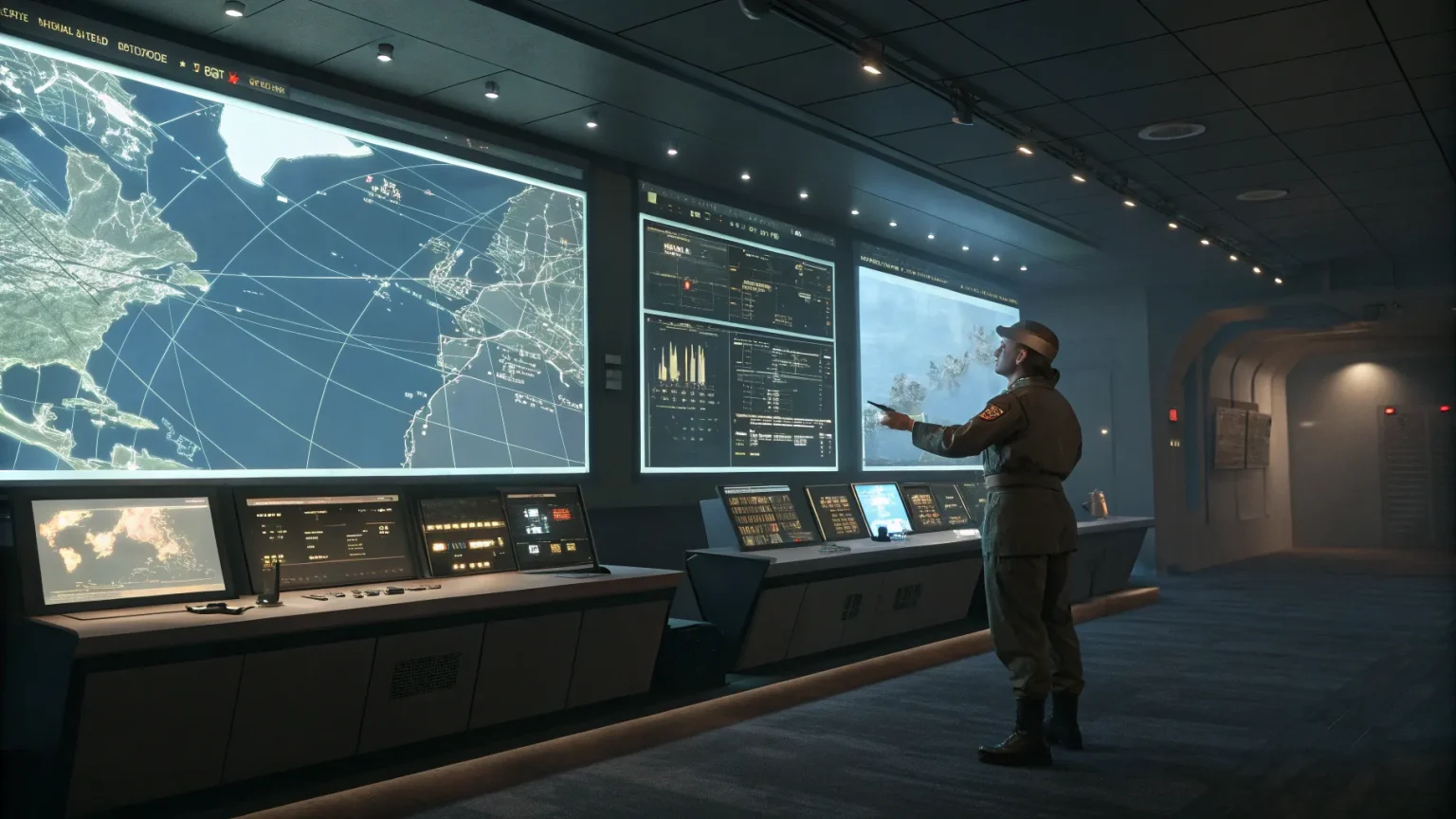
Russia claims it has successfully tested its nuclear-powered Burevestnik cruise missile and plans to move to deploy it, President Vladimir Putin said on Sunday, October 26. The announcement, delivered in a wartime command setting, signals a fresh phase in Moscow’s long-running effort to field new strategic weapons as the war in Ukraine grinds on.
Russia’s top general, Valery Gerasimov, told Putin that the missile flew about 14,000 kilometers and remained aloft for roughly 15 hours during an October 21 test. Moscow argues the weapon can evade air defenses and strike from unexpected directions, raising concerns for arms control and regional security.
What Moscow Says About Burevestnik
The missile, known as the 9M730 Burevestnik, carries the NATO designation SSC-X-9 Skyfall. Russian officials have presented it as a long-range cruise missile powered by a nuclear reactor. They say that configuration enables extreme endurance and erratic routing.
“It is a unique ware which nobody else in the world has,” Putin said, wearing camouflage at a command point meeting with generals.
Gerasimov reported a long-distance, long-duration flight profile during the October 21 event. He briefed Putin that the test demonstrated sustained airborne time and range that far exceed conventional systems.
- Flight distance claimed: about 14,000 km (8,700 miles)
- Flight time claimed: about 15 hours
- Russian claim: “invincible” to current and future defenses
Background and Ties to Earlier Programs
Putin first unveiled a family of next-generation weapons in 2018, including a nuclear-powered cruise missile, a hypersonic glide vehicle, and an underwater drone. The Burevestnik appears to be that nuclear-powered concept. Its stated goal is to bypass missile defense by flying low and following nontraditional routes.
Past efforts seemed troubled. Western officials and open-source researchers linked a 2019 accident near Nenoksa on Russia’s Arctic coast to work on a system believed to be Burevestnik, citing a radiation spike and fatalities among specialists. Moscow has not publicly confirmed the exact system involved.
Safety and Environmental Questions
A cruise missile powered by a nuclear reactor raises safety risks. Launch failures or recovery mishaps could spread contamination across large areas, experts warn. Tracking and securing such a weapon after failed tests would also be difficult.
Independent analysts point to technical challenges in miniaturizing a reactor for flight while shielding crews and ground teams from exposure. They also ask how Russia would manage long flights over international waters or remote regions without incident reporting.
“An almost unlimited range and unpredictable flight path come with clear safety trade-offs,” said one European defense analyst, urging transparent data on test conditions and safeguards.
Strategic Impact and Arms Control
The test claim lands amid a frayed arms control system. The Intermediate-Range Nuclear Forces Treaty collapsed in 2019, and New START faces an uncertain future. A missile that can fly for many hours and approach targets from unusual vectors complicates early warning and defense planning.
Military planners in NATO states are likely to review detection and tracking methods, including airborne sensors and space-based surveillance. The weapon’s endurance could force new investments in continuous monitoring and layered defenses.
For Russia, a fielded Burevestnik would be a signal of strategic reach. It would also be a bargaining chip in any future talks where long-range, nuclear-capable systems are on the agenda.
Skepticism and Verification
Independent verification remains a challenge. Russia has not released flight telemetry, imagery, or debris analysis. Western governments will seek corroboration through satellite data and other intelligence before updating threat assessments.
Arms control advocates argue that transparency measures could reduce miscalculation. They call for notifications, safety protocols for tests, and renewed dialogue on novel nuclear systems. Without such steps, large claims risk fueling an action-reaction cycle.
What Comes Next
Moscow says it will proceed with deployment planning. That could involve more flight tests, infrastructure upgrades, and training for specialized units. Public timelines are unclear.
Other capitals will watch for signs of serial production, regular testing, or integration with Russia’s long-range forces. They will also track how the system is postured in relation to European and Arctic theaters.
Russia’s announcement marks a new stage in its pursuit of long-range nuclear-capable weapons, but many facts remain unconfirmed. If the claimed performance proves accurate, Burevestnik would strain missile defense planning and complicate crisis management. The key questions now are safety, verification, and whether any diplomatic channel can bring this class of weapons under rules and checks. Observers will look for evidence from future tests, details on protective measures, and any opening for talks that include novel nuclear systems.


