

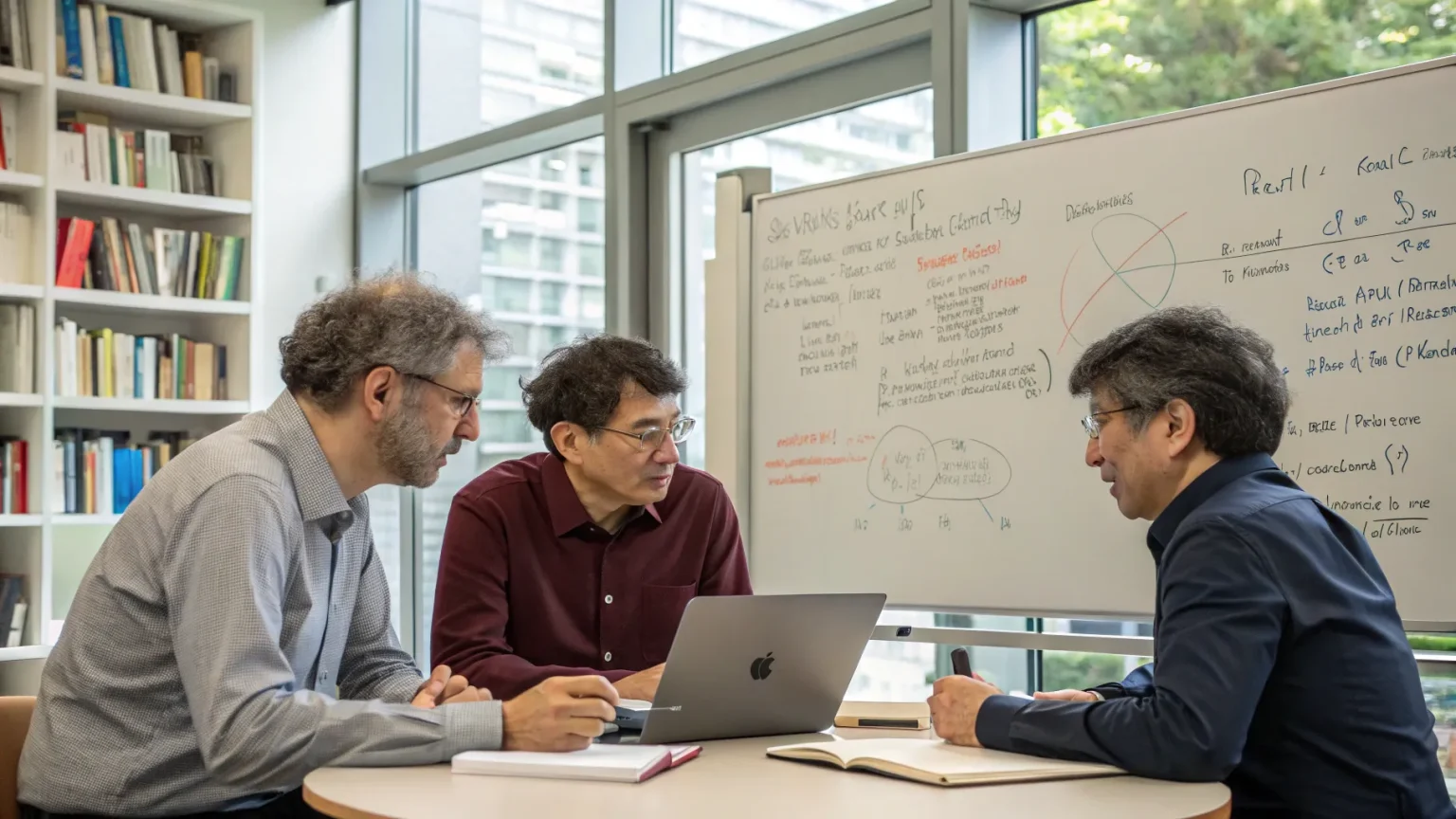
Joel Mokyr, Philippe Aghion, and Peter Howitt were reported Monday as recipients of the Nobel Memorial Prize in Economic Sciences for research linking technological innovation to long-run growth and creative destruction. The claim, widely circulated in academic and policy circles, credits the trio for work that shaped modern growth theory and explained how new ideas can raise living standards while displacing older firms and methods. Independent confirmation from the Royal Swedish Academy of Sciences was not immediately available.
“Joel Mokyr, Philippe Aghion and Peter Howitt won the Nobel memorial prize in economics Monday for their research on how technological innovation fuels economic growth and creative destruction.”
How Their Work Changed Growth Theory
Mokyr, a historian of economic change, has argued that ideas and the culture of invention were central to the Industrial Revolution and later waves of progress. His research links inventions to the institutions and incentives that facilitate the spread of knowledge. He has stressed that productivity moves when societies reduce barriers to experimentation and diffusion.
Aghion and Howitt helped formalize those ideas in economics. Their “Schumpeterian” model describes growth as a chain of innovations. Each new product or process makes previous ones obsolete, pushing firms to invest in research to stay ahead. This framework shifted the policy debate away from capital accumulation alone toward innovation, entry, and competition as engines of growth.
The approach has guided how governments think about science policy, competition rules, and education. It suggests that vibrant entry and exit, not just incumbent strength, support steady gains in productivity and wages.
Why Creative Destruction Matters Now
The concept of creative destruction explains why new technologies can boost national output while hurting some workers and firms in the short run. It also clarifies why productivity slowdowns can follow periods when diffusion stalls, even if research spending rises.
Recent data in many advanced economies show slower productivity after the mid-2000s, with brief spikes during the pandemic recovery. Policymakers have debated whether the bottleneck is invention or adoption. The Schumpeterian lens points to market structure, competition, and reallocation as key constraints. It argues that breakthrough gains require conditions that allow entrants to challenge incumbents.
Policy Debates and Practical Lessons
Advocates of stronger competition policy point to this research as evidence for keeping markets open to challengers. They argue that tight markets can blunt the incentive to innovate. Others warn that too much churn can discourage long-term research if firms cannot recoup costs.
The work by Aghion and Howitt has also influenced debates on taxation and education. Incentives for research and development can raise the return to innovation. At the same time, training and mobility policies can help workers shift into growing sectors, easing the pain of displacement.
- Competition supports entry and challenges complacent incumbents.
- R&D incentives can speed new products and processes.
- Worker mobility and training reduce the costs of disruption.
Industry Effects and Case Studies
Information technology offers a clear example. New software and cloud services improved productivity in firms that reorganized work around them. Companies that resisted change lost ground. This pattern mirrors the theory: gains flow to those who adopt and adapt.
Clean energy is another test. Rapid declines in solar and battery costs were driven by research, learning-by-doing, and global competition. The transition is disruptive to fossil fuel assets but can raise efficiency and create new supply chains. Policy choices on market entry and standards will shape how quickly benefits spread.
What To Watch Next
If the award is confirmed, it would highlight research that connects abstract theory to daily economic outcomes. It would also highlight how policy can turn ideas into widespread prosperity. The themes are timely as governments weigh industrial policy, antitrust cases, and the rollout of artificial intelligence.
For businesses, the message is clear. Invest in innovation, prepare for product and skill turnover, and focus on adoption, not just invention. For workers, the key is flexibility and access to training that keep pace with shifting demand.
The reported award highlights a simple yet powerful insight: growth comes from new ideas, and progress requires space for renewal. Confirmation or not, the research will continue to shape debates on competition, inequality, and the future of work.


