

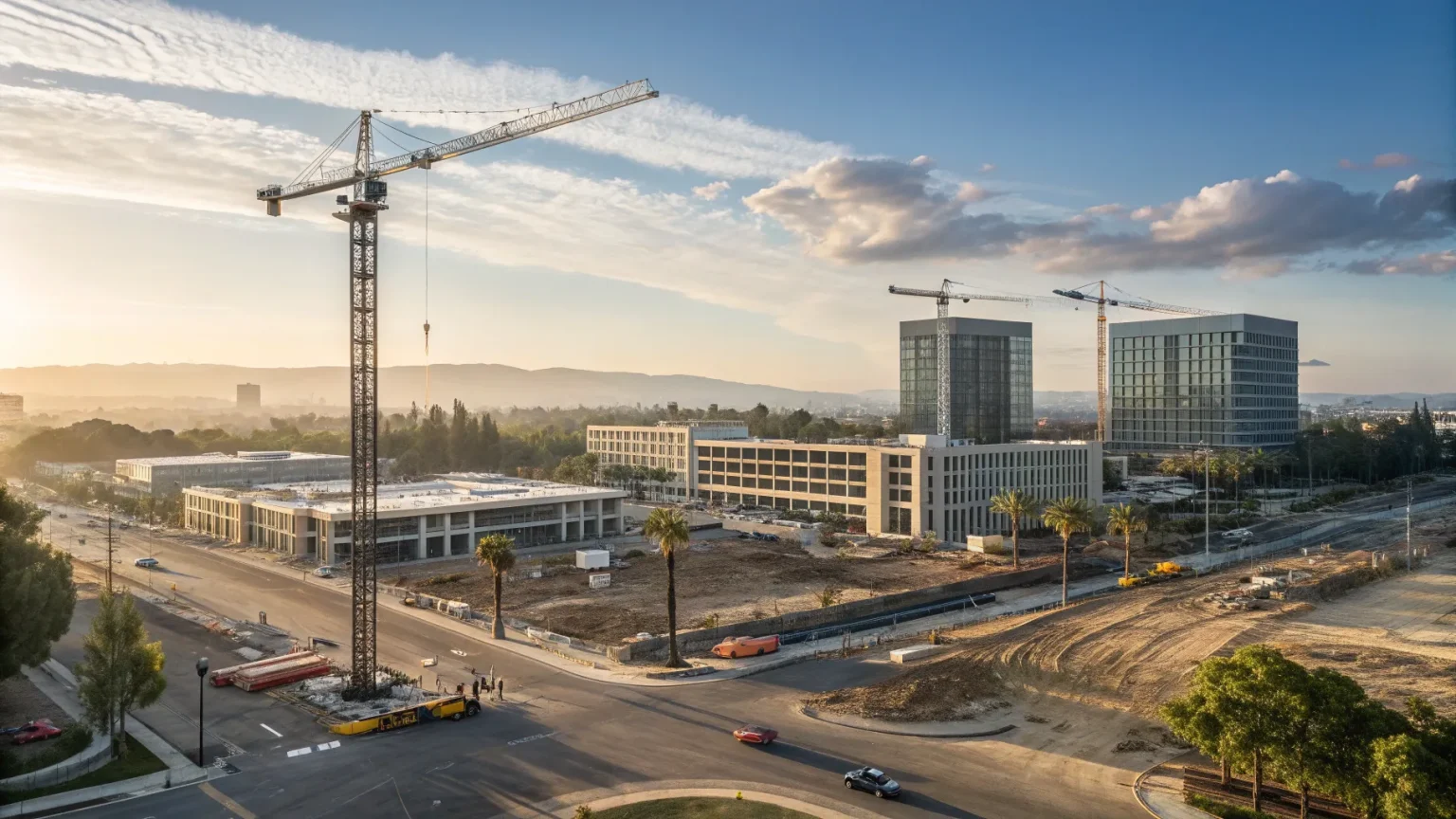
Two major developments in Santa Clara, the city Nvidia calls home, face long delays because the local power supplier cannot yet meet their needs. The projects could sit idle for years while crews work to expand electric capacity, highlighting a growing clash between rapid tech growth and the grid’s slow build-out.
The issue centers on the timing and scale of power required for new sites. Developers, equipment suppliers, and city leaders are watching closely. The stakes are high for the region’s economy and for companies planning to ride the artificial intelligence boom.
“Two projects in Nvidia’s hometown may sit empty for years because the local utility isn’t ready to supply electricity.”
Projects Face a Power Roadblock
Santa Clara is one of Silicon Valley’s busiest hubs for high-performance computing and data-heavy operations. Many new facilities need far more electricity than typical office parks. That shift has outpaced the ability of local systems to upgrade at the same speed.
The city’s municipal provider, Silicon Valley Power, manages electricity for residents and a dense cluster of tech firms. Large new connections often require substation expansions, high-voltage equipment, and complex planning. Those steps take years, not months.
A Strained Grid Meets the AI Boom
Across the United States, utilities report record-sized requests for new power service from data centers, chip plants, and clean-tech manufacturing. AI training clusters, in particular, demand consistent, high-capacity power. Lead times for transformers and switchgear remain long, and utility crews face tight labor markets.
Industry studies show long interconnection queues for new generation and large loads. Developers frequently face multi-year timelines for approval and construction. That mismatch can force buildings to wait for wires and substations to catch up.
Local Utility Constraints and Timelines
In Santa Clara, the challenge is local and regional. New projects often depend on both city upgrades and broader grid improvements. Permitting, environmental reviews, and equipment procurement add to the clock.
Utilities typically plan capacity years ahead, using forecasts that can be overwhelmed by unexpected spikes in demand. The recent rush for computing power has outpaced many earlier forecasts. Even with crews working, the physical work to expand lines and stations cannot be rushed safely.
- High-capacity transformers can take more than a year to arrive.
- Substation builds and expansions often span multiple construction seasons.
- Regional constraints can require coordination across several agencies.
Economic and Industry Impact
Empty buildings represent dead capital and lost tax revenue. For tenants, delays can push back product launches and hiring plans. Suppliers for heating, cooling, and compute equipment also face uncertain schedules.
Some companies are exploring interim fixes, such as phased power use, smaller initial loads, or onsite backup generation. These steps come with trade-offs. Diesel or gas generators conflict with clean air goals. Battery systems can help with peaks but rarely replace full utility service for power-hungry sites.
Real estate markets feel the strain. Landlords may hold finished space without rent. Lenders may demand revised timelines. Cities must balance the promise of new jobs with the reality of grid constraints.
What Could Ease the Bottleneck
Experts point to a few practical steps. Faster procurement for key grid equipment, standard designs for repeatable substation projects, and clear communication between utilities and developers can trim months from schedules. Regional planning for high-load clusters can also help by aligning new lines, substations, and generation.
Longer term, adding new clean generation and transmission remains critical. Demand response and energy efficiency can reduce peak strain, but the scale of new computing loads suggests larger upgrades are unavoidable.
What to Watch Next
Developers will seek updated timelines from the local utility and regional grid operators. City officials may review permitting processes to keep construction aligned with power delivery. Tenants will consider phased occupancy or alternative sites if delays stretch.
The outcome in Santa Clara will signal how other tech hubs handle similar requests. If power delivery can speed up, projects might move on schedule. If not, more finished buildings could wait for the grid to catch up.
For now, the two projects at issue serve as a warning. Demand for AI-ready space is surging faster than the wires that power it. The region’s next steps—procurement, planning, and coordination—will determine how long those doors stay closed and how the Bay Area competes for the next wave of investment.


