

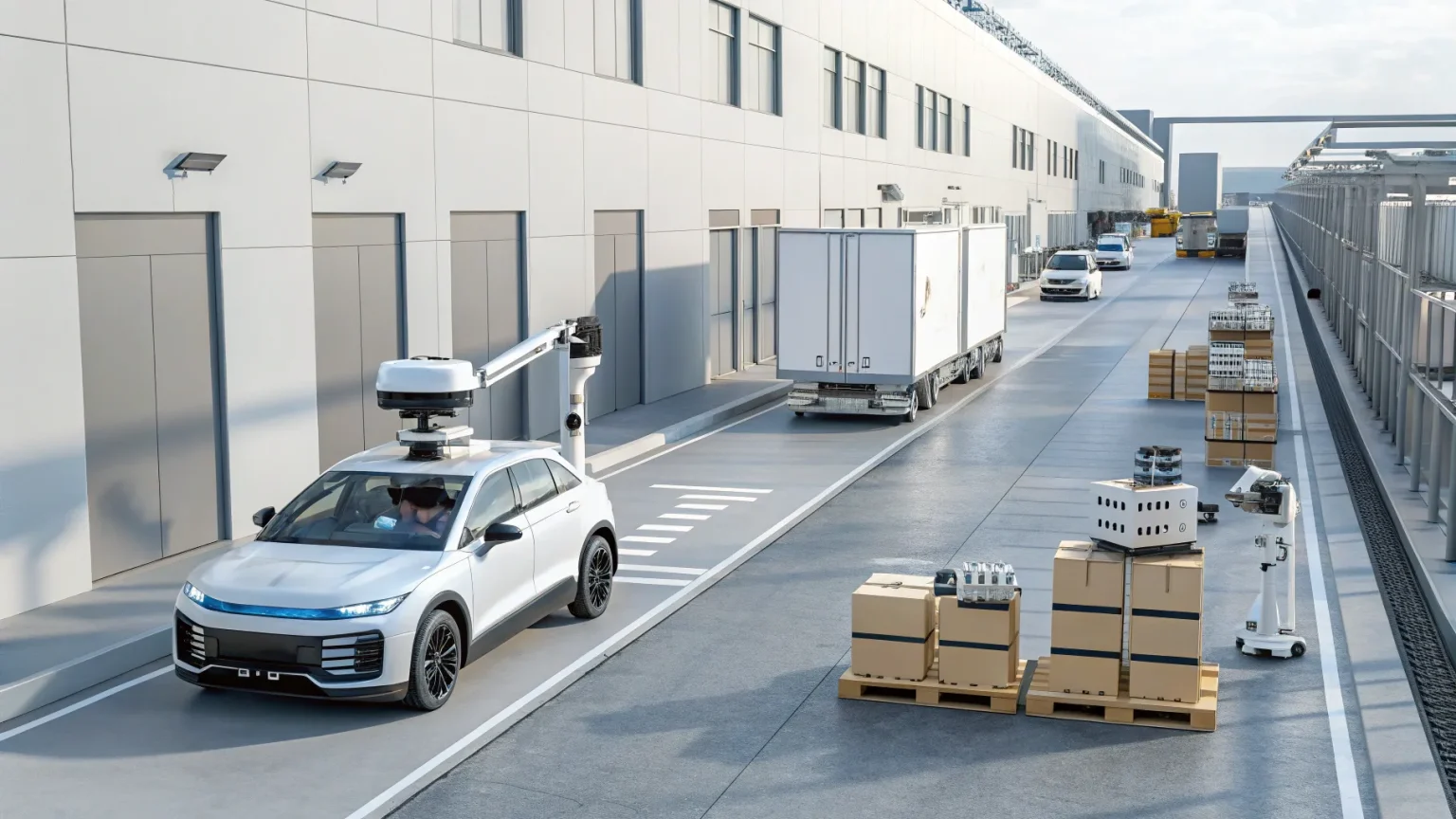
Nvidia is putting new weight behind robotics, with CEO Jensen Huang calling it the company’s second most important growth area after artificial intelligence. The statement signals a wider push into machines that can perceive, plan, and act, including self-driving cars. It arrives as automakers, warehouse operators, and startups hunt for dependable compute and software to run autonomous systems.
Huang’s emphasis comes as Nvidia’s AI chip business dominates industry demand. The company’s next bet is that many of the same tools behind AI training and inference will also power robots on factory floors and driver-assistance systems on the road. The move could shape how quickly autonomy spreads from pilot projects to large deployments.
Why Robotics Matters to Nvidia
Nvidia has spent years building a stack for physical automation. Its Jetson modules put AI compute at the edge. Its Drive platform targets vehicles. Its Isaac tools offer simulation, mapping, and motion planning. Together, these pieces aim to shorten development cycles and lower deployment risk for customers.
“Robotics — including self-driving cars — is the company’s second most important growth category after AI,” CEO Jensen Huang said.
Investors have long viewed automotive and robotics as promising but slower to mature than data center AI. Demand for generative AI exploded first, while physical automation has faced regulatory hurdles, safety benchmarks, and complex integration. Huang’s ranking suggests that the company expects those bottlenecks to ease as software and sensors improve.
Self-Driving Stakes and Industry Partnerships
Automakers and suppliers have been moving from one-off pilot fleets to broader software-defined strategies. Many now design vehicles with centralized computing, over-the-air updates, and scalable driver-assistance features. Nvidia has lined up programs across premium brands and electric-vehicle makers to supply chips and APIs for automated driving and in-cabin AI.
The market remains split between full autonomy ambitions and advanced driver-assistance systems that provide lane keeping, automated parking, and supervised highway driving. Software certification and liability still slow full self-driving. Yet recurring software revenue tied to features and subscriptions offers a path to monetization even before vehicles drive themselves anywhere, anytime.
Competition is intense. Qualcomm pushes its Snapdragon Ride platform. Mobileye sells vision systems and driver-assistance stacks to major carmakers. Tesla builds its own silicon and end-to-end software. For Nvidia, the edge comes from its developer ecosystem and the carryover of AI models refined in data centers to vehicle-grade chips.
Inside Nvidia’s Robotics Push
Beyond cars, factories and warehouses are adopting robots for picking, packing, inspection, and mobile transport. Developers use simulation to train and test control policies before they touch a real robot. Nvidia’s tools support digital twins and reinforcement learning, which can cut time and cost during trials.
The company has also promoted a path from perception to action: cameras and lidar feed neural networks; planners decide what to do; and low-latency hardware executes commands. Reliability and repeatability are central. Customers want predictable performance in cluttered, dynamic spaces with humans.
- Industrial users seek higher uptime and lower unit costs per task.
- Retail and logistics look for safer, faster fulfillment during demand spikes.
- Hospitals and labs need automation for routine delivery and sample handling.
Safety certification is still a bar many robotics projects must clear. Clear test procedures, simulation coverage, and audit trails will likely determine which platforms scale.
Market Outlook, Risks, and What’s Next
Analysts point out that robotics and automotive remain small compared with Nvidia’s data center revenue. Still, backlogs for vehicle programs and pilot-to-production transitions in logistics hint at a longer, steadier curve. If those programs reach volume, chip and software demand could compound over several years.
Risks include slower regulatory approvals for autonomous driving, cost pressures on automakers, and new chip entrants building targeted solutions. Supply-chain constraints or shifts in safety standards could also delay rollouts. On the upside, a steady cadence of over-the-air updates lets vendors improve systems in the field without new hardware.
Huang’s framing sets a clear internal priority: make the tools that put AI to work in the physical world. If Nvidia can convert developer interest into production deployments, its robotics bet could become a durable second engine for growth.
The next signals to watch include new vehicle design wins, large-scale industrial robot deployments, and regulatory movement on automated driving. Progress on simulation fidelity and safety validation will also indicate how fast real-world autonomy can expand.


