

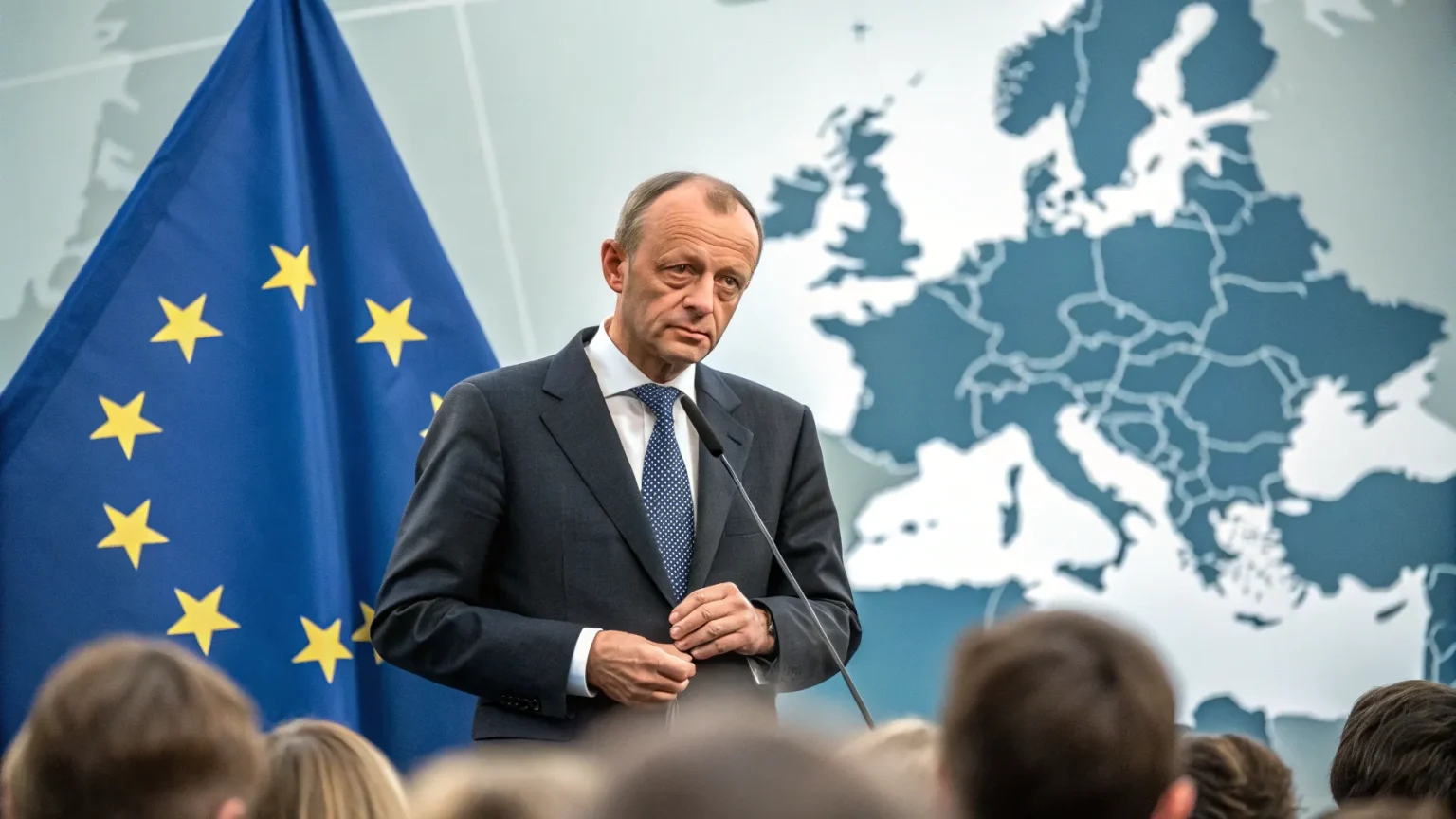
German Chancellor Friedrich Merz sharply criticized the United States’ newly released national security strategy on December 9, calling parts of it unacceptable and urging Europe to rely less on Washington. His comments signal a harder line from Berlin on defense responsibilities and revive long-standing questions over who should lead Europe’s security.
Merz argued that European democracies can protect themselves without U.S. direction. He linked this stance to his earlier doubts about U.S.-led peace initiatives for Ukraine, saying the continent must set its own course. The remarks add pressure to an already sensitive debate inside NATO as war rages in Ukraine and defense budgets rise across Europe.
A Sharper Tone From Berlin
Merz’s statement reflected a clear push for strategic autonomy in Europe. He criticized aspects of Washington’s strategy as intruding on Europe’s political space and offered a direct rebuke to any suggestion that U.S. leadership is essential to safeguard democratic norms on the continent.
“I see no need for the Americans to now want to save democracy in Europe. If it were necessary to save it, we would manage that on our own.”
He also labeled parts of the U.S. strategy “unacceptable,” a phrase that suggests policy friction at a high level. While he did not specify which sections, the timing—immediately after Washington’s policy release—indicates a dispute over roles and expectations in transatlantic security.
Europe’s Burden-Sharing Debate
The dispute taps into a long-running discussion over NATO burden sharing. For years, U.S. administrations have urged European allies to spend more on defense and take greater responsibility. European leaders, meanwhile, have debated how to build capacity without weakening NATO unity.
Since Russia’s full-scale invasion of Ukraine, European states have increased defense spending and reexamined their procurement plans. Some are meeting or pledging to meet the NATO guideline of 2 percent of GDP. The push has brought fresh momentum to EU defense cooperation programs and joint procurement efforts, while raising questions about duplication with NATO.
Merz’s message fits a broader European trend that favors more independent decision-making on security. It also reflects political pressure at home to show that Berlin can set direction inside Europe, not just follow Washington’s lead.
Implications for NATO and Ukraine
The immediate concern is whether this rhetoric strains NATO unity at a sensitive time. Allies are coordinating support for Ukraine, managing ammunition shortfalls, and planning long-term aid frameworks. Mixed signals could complicate planning and public support.
Merz has already shown skepticism about U.S.-led peace proposals for Ukraine, indicating he wants European states to shape any eventual diplomatic process. That stance could give Europe more leverage, but it may also slow coordination if allies disagree on timelines, terms, or security guarantees for Kyiv.
- Potential benefit: stronger European capacity and credibility.
- Potential risk: policy splits that slow collective action.
U.S. officials typically argue that shared values and joint planning remain the bedrock of transatlantic security, and that European investments complement, rather than replace, NATO structures. Merz’s critique tests that balance, especially if others in Europe echo his position.
Reading the Strategy Rift
Merz’s use of the word “unacceptable” suggests friction over scope—how far the U.S. strategy extends into European political priorities—and over tone. European leaders often welcome U.S. deterrence but bristle at perceived overreach. His assertion that Europe can secure its own democracy signals confidence in European institutions and voter resilience against disinformation and interference.
“Europe must reduce its reliance on the United States and can safeguard its own democracy.”
The question is how quickly Europe can convert this stance into hard power: industrial output, air defense, long-range fires, and munitions stockpiles. Building those capacities takes time, money, and political consensus—areas where European governments still differ.
What to Watch
In the coming weeks, attention will turn to whether Berlin pairs this message with concrete steps. Observers will look for procurement decisions, joint European defense projects, and any changes to Germany’s role in NATO planning. Washington’s response will also matter. A measured reply that emphasizes cooperation could keep the dispute contained. A sharper exchange could fuel more debate across Europe.
For now, Merz has reset the conversation. He challenged the idea that the U.S. must lead on Europe’s democratic protection and called for more independence in security policy. The outcome will hinge on whether European leaders can align strategy, spending, and industry at the pace the security environment demands.
The takeaway: Europe is signaling a desire for more control while keeping ties with Washington. The balance between autonomy and alliance discipline will shape support for Ukraine, NATO cohesion, and the continent’s security posture in the year ahead.


