

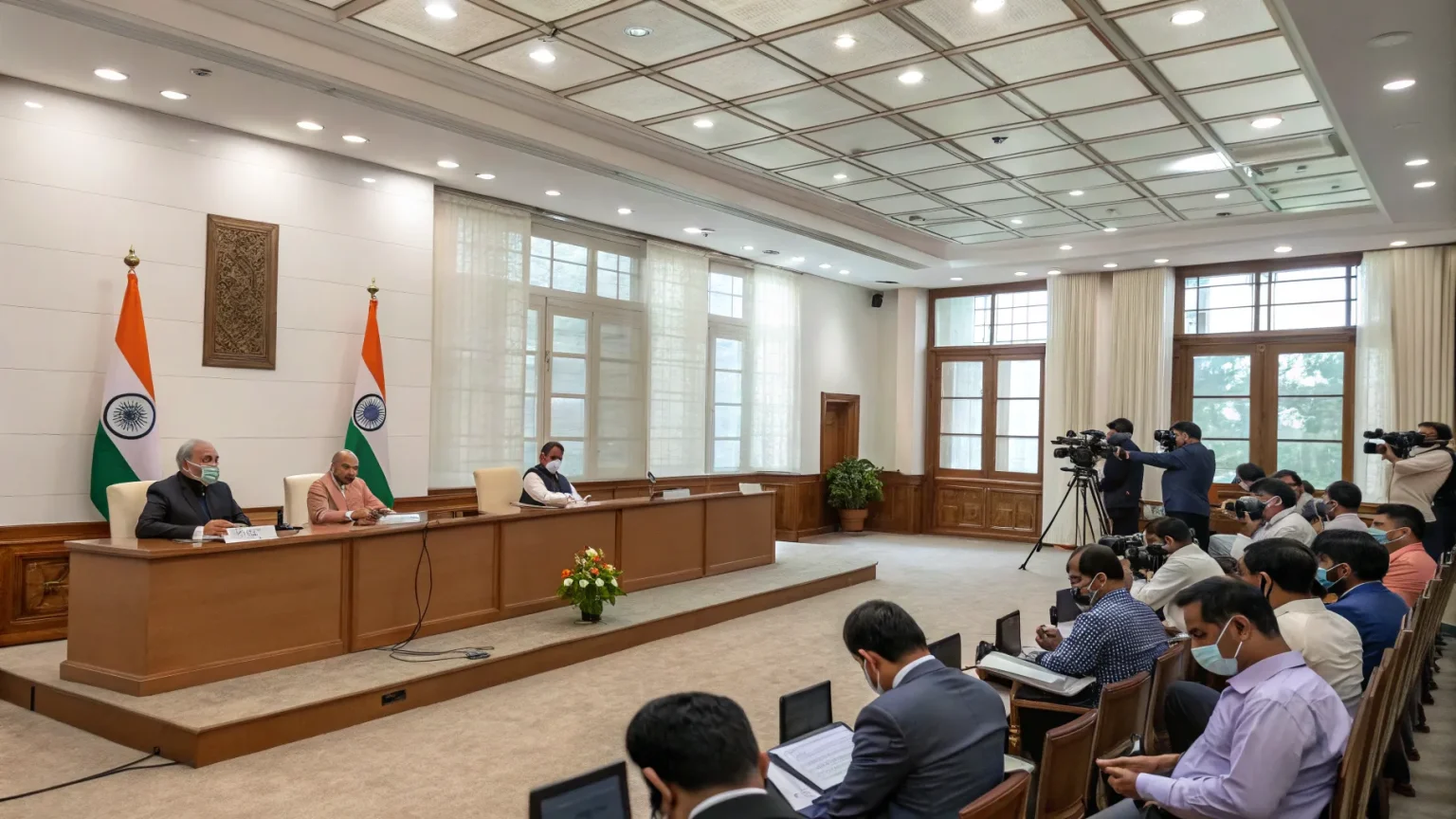
India’s Ministry of External Affairs held its weekly media briefing in New Delhi, with questions centering on India–US ties after recent comments by former US President Donald Trump, India’s purchases of Russian crude, and shifting geopolitical alignments. The update drew attention as officials faced queries on regional dynamics, upcoming bilateral meetings, and how New Delhi is setting priorities in a tense global climate.
The session came as diplomats weigh economic security, energy needs, and defense cooperation. Reporters sought clarity on immediate policy steps and any signals for partners in Washington, Moscow, and the neighborhood.
India–US Relations in Focus
India and the United States have expanded cooperation across defense, technology, and trade over the past decade. Both sides launched the Initiative on Critical and Emerging Technology in 2023 to deepen work on semiconductors, 5G/6G, space, and defense manufacturing. Trade has grown, with goods and services flows estimated in the hundreds of billions of dollars in recent years.
Election-season remarks in the United States often trigger questions on future policy. Indian officials typically avoid commenting on domestic politics abroad and emphasize continuity in ties across administrations. The briefing was expected to reflect that approach, stressing shared interests in supply chains, maritime security, and high-skill mobility.
Analysts watch for any signals on stalled trade irritants, smoother visas for professionals, and timelines for defense co-production projects. A steady tone from New Delhi would aim to reassure investors and strategic partners.
Russian Oil Purchases and Energy Security
India’s oil demand continues to rise, and price-sensitive sourcing remains central to policy. Since 2022, Russian crude has formed a larger share of India’s imports, aided by discounted prices and complex world markets. Industry trackers estimate Indian refiners bought roughly 1.5 to 2.0 million barrels per day of Russian grades at points in 2023, making India a key buyer of seaborne cargoes.
New Delhi has long stated that energy decisions serve national interests and market stability. Purchases comply with legal frameworks, including the Group of Seven price cap regime when applicable. Refiners balance logistics, payment channels, and insurance risks with the need to keep inflation in check at home.
The briefing was expected to address how price trends, sanctions enforcement, and freight costs are shaping this mix. Officials often point out that lower crude costs support growth and help manage fuel prices that affect millions of consumers.
Regional Priorities and Emerging Pressures
Questions also touched on neighborhood diplomacy. India maintains active engagement with South Asian partners on connectivity, power trade, and disaster response. Maritime security in the Indian Ocean and disruptions to shipping in West Asia remain high on the agenda for trade-dependent economies.
The conflict in Ukraine, fighting in Gaza, and Red Sea shipping risks have raised freight and insurance costs. Indian missions coordinate closely with domestic agencies and industry to keep trade routes open and citizens safe. New Delhi continues to advocate dialogue, de-escalation, and humanitarian access in conflict zones.
What Reporters Sought to Clarify
- Whether recent US political remarks affect bilateral timelines on tech and defense projects.
- How India weighs Russian crude purchases against sanction policies and market prices.
- Updates on near-term visits, dialogues, or joint military exercises.
- India’s assessment of shipping security risks and contingency planning.
Signals to Watch in the Weeks Ahead
Diplomats are likely to track energy price movements, US policy discussions during the campaign season, and supply chain news in electronics and defense. Any scheduling of high-level visits or working groups would hint at momentum in ties with Washington. Oil import data and refinery runs will show whether the Russian share remains elevated or starts to rebalance.
For regional security, shipping advisories and insurance rates in West Asia will shape risk assessments. Progress on cross-border power and infrastructure projects in South Asia could help buffer economic pressures from global slowdowns.
The briefing underlined steady foreign policy aims: strategic autonomy, diversified energy, and a rules-based approach to trade and security. Observers will watch for follow-through in the form of signed contracts, market data, and calendar dates for key dialogues. Those markers will show how India translates public messaging into practical outcomes.


