

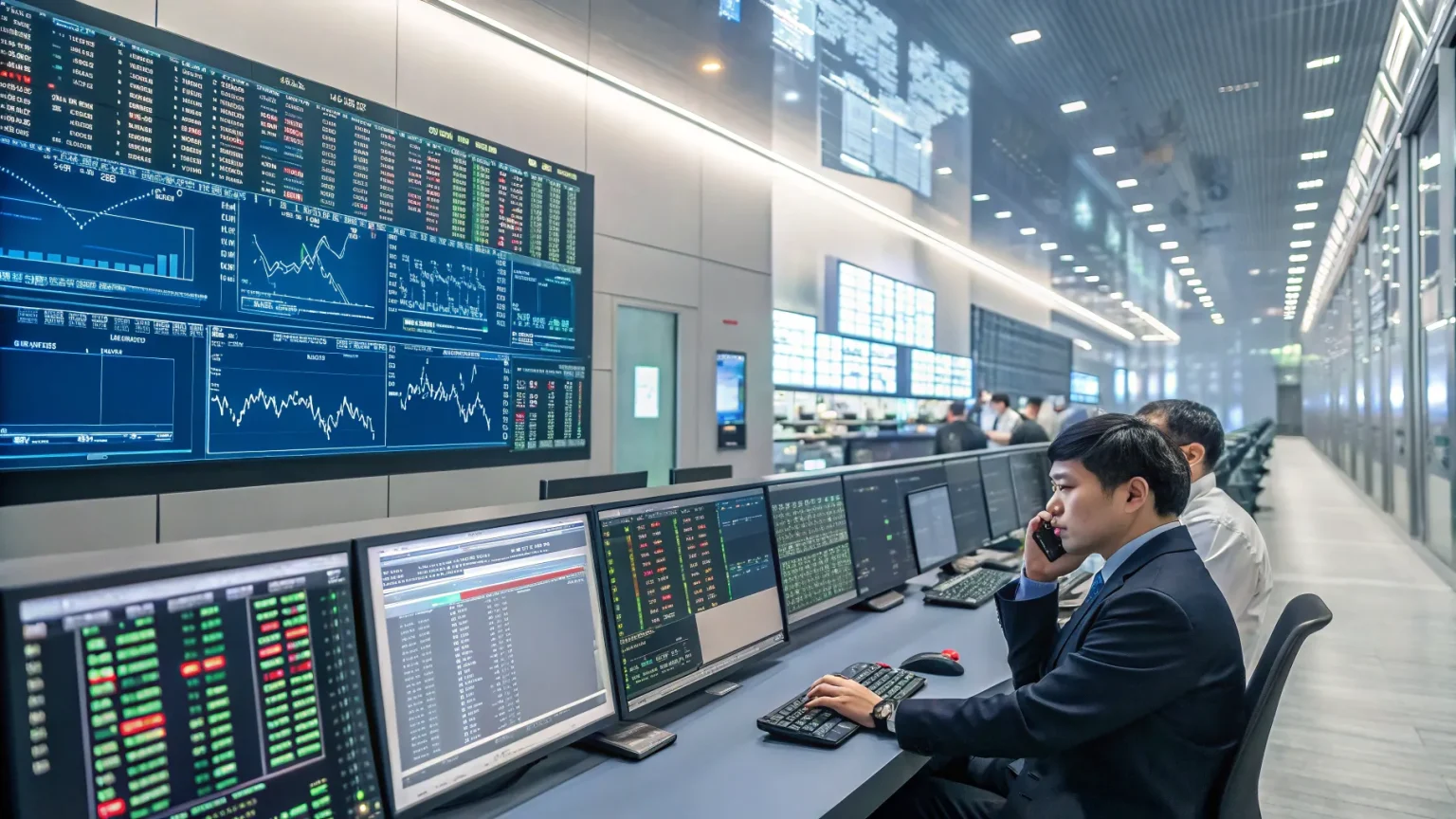
Investors are pouring money into companies tied to artificial intelligence after another year of strong gains. The surge spans chipmakers, cloud providers, data-center operators, and firms that supply power and networking gear. The move reflects growing belief that AI demand will keep rising and lifting a wide set of suppliers.
“Investors piled into the winning artificial intelligence-adjacent sector following another big year of gains.”
The rush follows months of rising share prices and repeated upgrades from Wall Street. It also draws in retail traders seeking momentum. The question now is whether profits will catch up with high expectations.
Background: A Broadening AI Trade
The first wave of the AI rally centered on a few leaders in chips and cloud software. As orders for training and running models increased, demand rippled through the supply chain. That lifted stocks in memory, servers, cooling, and power equipment. Companies tied to data-center real estate also benefited from higher leasing and expansion plans.
Hardware has led much of the action. Graphics processors remain scarce, while new accelerators and faster memory are in testing. Cloud platforms are expanding capacity and seeking cheaper, more efficient infrastructure. Even utility providers and grid contractors entered investor watchlists as data centers require more power.
This broadening reflects a simple idea: selling shovels in a gold rush. Investors see steady orders for components and services that feed AI projects. That view helped push up valuations across the “picks and shovels” group.
What Is Driving The Money Flows
Analysts point to a mix of hype and real demand. Model training needs heavy compute and storage. Inference, which serves AI results to users, demands scale and low latency. Both push spending across hardware, software, and power.
- Data-center buildouts are accelerating to meet AI workloads.
- Chip supply remains tight as new process nodes ramp.
- Enterprise pilots are moving from trials to early deployment.
- Vendors pitch AI features to protect market share and pricing.
Investors also cite fund flows into sector-focused exchange-traded funds. These vehicles magnify interest in suppliers linked to AI growth. As prices rise, index rebalancing can pull even more capital into the group.
Winners, Skeptics, and Valuation Risks
Bulls argue the spending cycle could last years. They expect rising cloud budgets, new AI PCs and phones, and more automation in offices and factories. If that view holds, suppliers across chips, memory, networking, and cooling may post stronger revenue and margins.
Skeptics see signs of crowding. They warn that some companies have thin AI exposure but trade as if they are core beneficiaries. They also flag the risk of double ordering in the supply chain. If end demand slows, inventories could rise and pricing could weaken.
Valuations are a key fault line. Price-to-sales ratios have stretched for several names with limited profits. Bears note that past tech booms often priced in years of growth that did not fully arrive. Bulls counter that AI workloads are more compute-heavy than prior waves, supporting longer cycles.
Energy and Infrastructure Constraints
Power supply is a growing concern. New data centers need large and steady electricity. Some regions face grid bottlenecks and long interconnection queues. Delays could slow deployment schedules and raise costs.
Cooling and water use are also under scrutiny. Operators are testing liquid cooling and more efficient designs. Local permitting rules and community pushback may shape where and how fast facilities expand.
What To Watch Next
Investors are tracking a few markers. First, visibility into multi-year cloud spending plans. Second, signs that enterprise projects move from pilots to production. Third, chip supply progress and delivery timelines. Fourth, power contracts and grid upgrades near major data-center hubs.
Earnings season will test the narrative. Order backlogs, bookings, and guidance will show whether demand is broad-based or concentrated. Any hint of easing supply tightness or slower buildouts could shake sentiment.
The AI-adjacent trade has momentum and a widening base of participants. It also carries valuation and execution risks. For now, investors are betting that the buildout continues and spreads across more parts of the economy. The next phase will hinge on proof that spending converts to durable profits across the ecosystem.


