

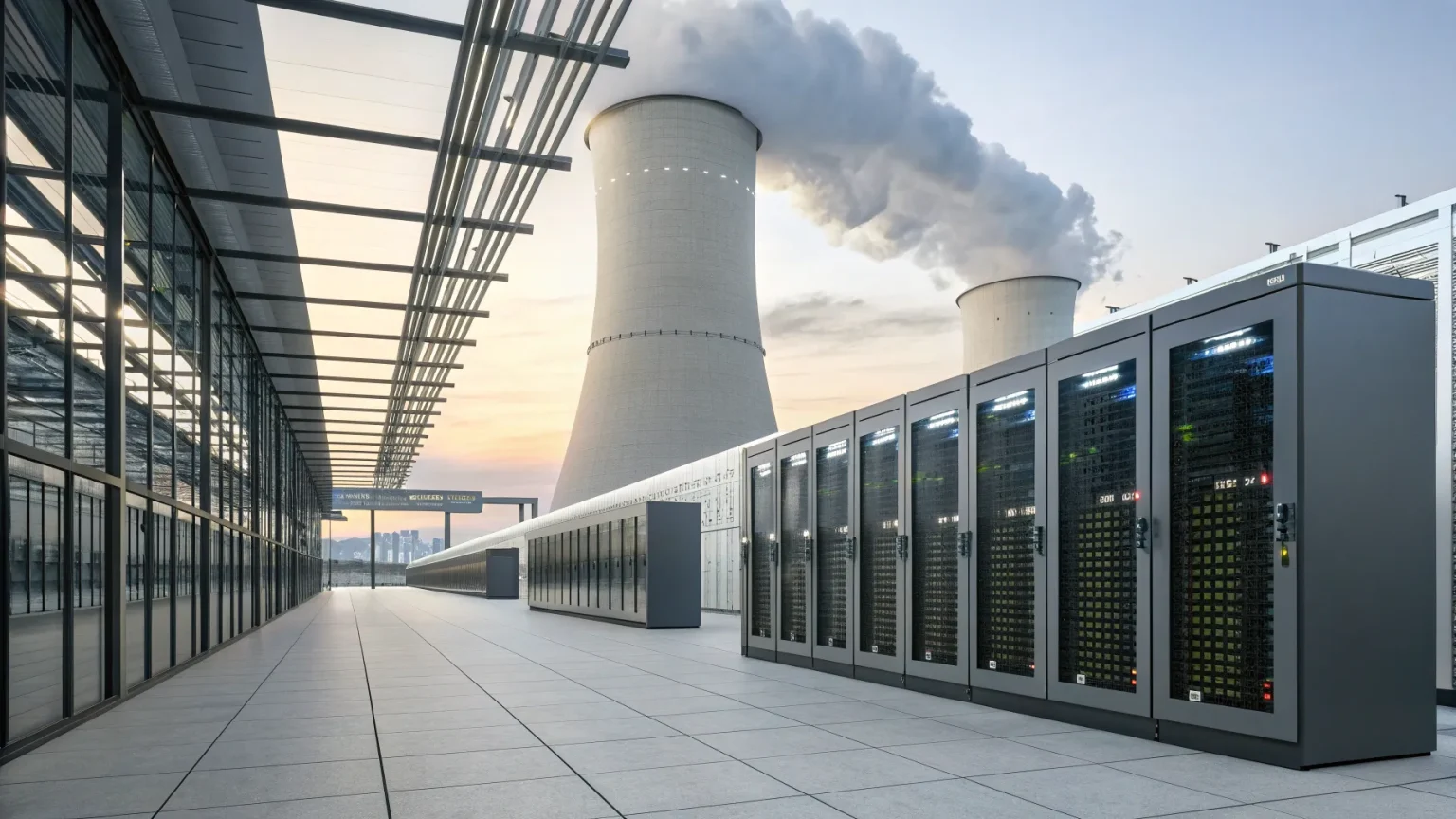
As a wave of artificial intelligence projects drives power demand to new heights, investors are shifting money into nuclear energy to keep data centers running. The move is gathering speed this year as large technology firms seek steady, carbon-free electricity to meet growth plans and climate goals. The debate now centers on whether nuclear can scale fast enough, at a price that makes sense.
“As artificial intelligence will require vast new sources of electricity investors are betting on nuclear to power data centres.”
Why Power Demand Is Surging
Data centers already consume a large amount of energy, and AI training and inference add significant loads. The International Energy Agency projects that global electricity use by data centers, AI, and cryptocurrency could reach approximately 1,000 terawatt-hours in 2026. That would be roughly double 2022 levels.
Cloud providers are building new campuses near major cities and fiber hubs. Many states now report rising interconnection queues, with gigawatts of new demand from digital infrastructure. Utilities have begun revising load forecasts upward after years of flat growth.
The Nuclear Pitch And Its Hurdles
Nuclear plants operate continuously and do not emit carbon during operation. For companies promising 24/7 clean power, that is a significant attraction. Advocates say pairing reactors with data centers can provide a stable, local supply and reduce strain on transmission.
But costs and timing are sticking points. The Vogtle expansion in Georgia, which added two new reactors in 2023 and 2024, came online years late and far over budget. Smaller modular reactors, often cited as a faster option, face setbacks. In 2023, a flagship small reactor project was canceled after costs rose.
Safety, waste management, and community consent also shape public opinion. Environmental groups argue that energy efficiency, renewables, storage, and upgraded grids can meet most needs at lower risk and cost. Nuclear supporters counter that firm generation is needed to back up weather-dependent resources.
Deals And Money Flow
Capital is moving as power needs tighten. In 2024, Amazon agreed to acquire a data center campus next to the Susquehanna nuclear station from Talen Energy. The site aims to align hyperscale computing with existing atomic output. Microsoft has pursued 24/7 clean energy credits linked to nuclear generation and has explored advanced reactors for future sites.
Investors are also backing new reactor developers. Oklo, supported by Sam Altman, went public in 2024 to fund small reactors designed for industrial and computing loads. Utilities with nuclear fleets, such as Constellation Energy, have drawn interest for their ability to provide stable, carbon-free megawatts.
- Existing reactors can offer a 24/7 clean supply today.
- Advanced reactors promise smaller footprints and quicker builds, but face regulatory hurdles.
- Capital costs and long lead times remain key risks.
Alternatives And Grid Constraints
Even companies pursuing nuclear are diversifying. Google signed long-term geothermal agreements. Wind, solar, and batteries continue to expand where land and transmission allow. Many operators are also reducing power use per chip with new cooling systems and more efficient hardware.
Grid bottlenecks complicate every option. Transmission projects can take a decade or more. Sourcing power on-site reduces dependence on congested networks but narrows location choices. That is one reason some firms prefer campuses near existing nuclear plants or large substations.
What To Watch Next
Developers are racing to match power supply with AI roadmaps. Key signals to watch include new capacity contracts, federal loan guarantees for reactors, and state-level policies on siting and 24/7 clean energy credits. Progress on licensing small modular reactors will indicate whether advanced designs can transition from plans to projects.
Short term, existing reactors and demand-side measures will carry much of the load. Medium term, a mix of nuclear, renewables, storage, and efficiency is likely. Long-term, the balance will depend on build costs, regulations, and how quickly AI workloads grow.
The core question remains clear: can firm, carbon-free power scale on the same timeline as AI? Investors are placing early bets on nuclear. The next few years will test whether those bets pay off.


