

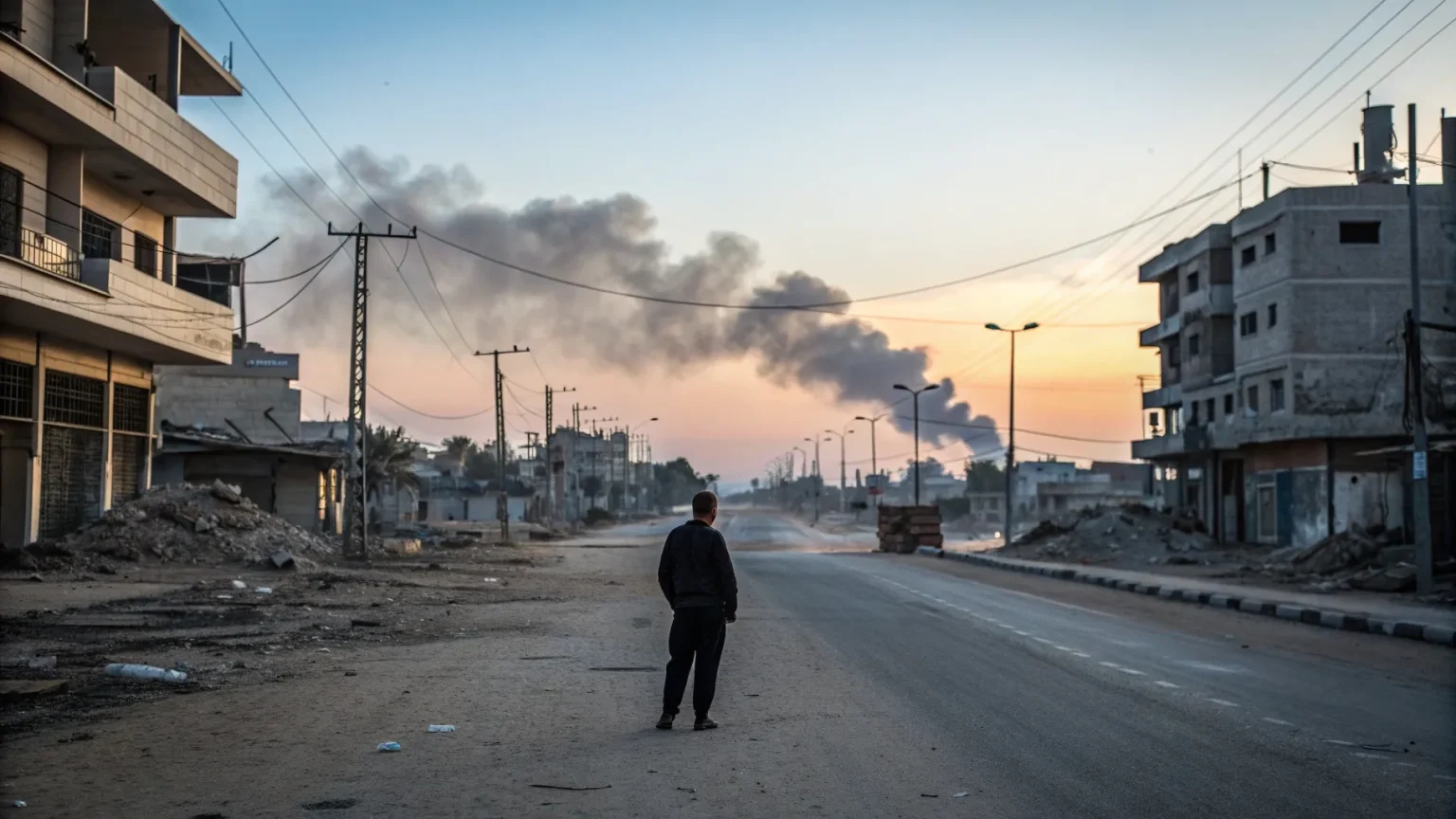
An uneasy ceasefire in Gaza wobbled on Sunday as the Israeli military intensified strikes on Hamas positions, leaving at least 45 people dead, according to local authorities. Two Israeli soldiers were also killed in Rafah. The escalation reignited fears of a broader breakdown, even as Washington said the truce still stands and aid deliveries remain stalled.
Israeli officials said renewed enforcement followed deadly attacks linked to Hamas. Hamas denied any violations and accused Israel of using a pretext to hit targets across the enclave. The back-and-forth left residents and aid groups bracing for more disruption, with supplies already in short reach.
Background of a Fragile Truce
The ceasefire, part of stop-start efforts to reduce fighting, has repeatedly strained under sporadic exchanges and disputes over terms. Previous pauses have hinged on limits to military activity, the flow of humanitarian aid, and the status of border crossings. Each condition remains a point of friction.
Ceasefires in the Gaza conflict have often been short-lived. Even small incidents can trigger escalation. Recent months have seen cross-border fire, strikes on militant positions, and urgent calls from international mediators to stabilize the situation.
Sunday’s Strikes and Casualties
Gaza’s health officials reported at least 45 fatalities after a wave of air and artillery strikes on Sunday. The Israeli military said the targets were Hamas assets across several districts. In a separate incident, the Israel Defense Forces confirmed two soldiers were killed in Rafah during operations.
Local witnesses described heavy bombardments and damage to residential areas near suspected militant sites. Officials warned that casualty figures could rise as rescue efforts continue.
Competing Claims Over Responsibility
Hamas rejected accusations that it breached the truce. The group framed Israel’s operations as an unjustified escalation.
“Hamas denied violations, calling Israel’s actions a pretext.”
Israeli officials argued that enforcement was necessary to deter attacks and protect border communities. They maintained that the ceasefire’s terms allow for action against imminent threats and active militant infrastructure.
From Washington, leaders urged restraint while signaling that the truce remains on paper. As one senior statement put it:
“The ceasefire is still in effect.” — President Donald Trump
Humanitarian Impact and Aid Stoppage
Humanitarian groups reported that aid shipments were halted, further straining Gaza’s limited supplies of food, fuel, and medical goods. Hospitals that already face shortages now confront a surge in trauma cases.
- Fuel constraints threaten power for clinics and water systems.
- Blocked routes slow evacuation and relief work.
- Disrupted communications impede coordination.
Residents lined up for essentials where available, while aid agencies pressed for safe corridors and predictable delivery schedules. Relief coordinators warned that repeated stoppages could cause lasting harm to public health.
Diplomatic Pressure and Regional Stakes
Regional mediators urged both sides to honor the ceasefire’s limits and resume humanitarian access. The latest strikes risk drawing in neighboring actors and complicating talks over border control and long-term security arrangements.
Analysts said the death toll and the loss of Israeli soldiers increase pressure on leaders to show strength, even as families demand clarity on the truce’s scope. A cycle of strike-and-response could harden positions and weaken prospects for negotiations.
What the Data and History Suggest
Casualty spikes during supposed pauses often precede broader flare-ups. Past ceasefires that lacked clear monitoring and enforcement have struggled to hold. Humanitarian stoppages tend to deepen mistrust and fuel grievances on both sides.
Observers noted three warning signs now present: rising fatalities, disputed narratives over violations, and suspended aid. Together, these factors have historically aligned with a higher risk of renewed hostilities.
The latest escalation highlights the fragility of the truce and the steep costs of any breakdown. The reported 45 deaths in Gaza and the loss of two Israeli soldiers raise the stakes for leaders and mediators. The key questions are whether aid can resume, whether claims of violations can be independently assessed, and whether both sides will accept tighter monitoring to prevent further strikes. Watch for movement on safe corridors, a verified mechanism to handle alleged breaches, and a clear timetable for deliveries. These steps could help stabilize the ceasefire and reduce the chance of a wider spiral.


