

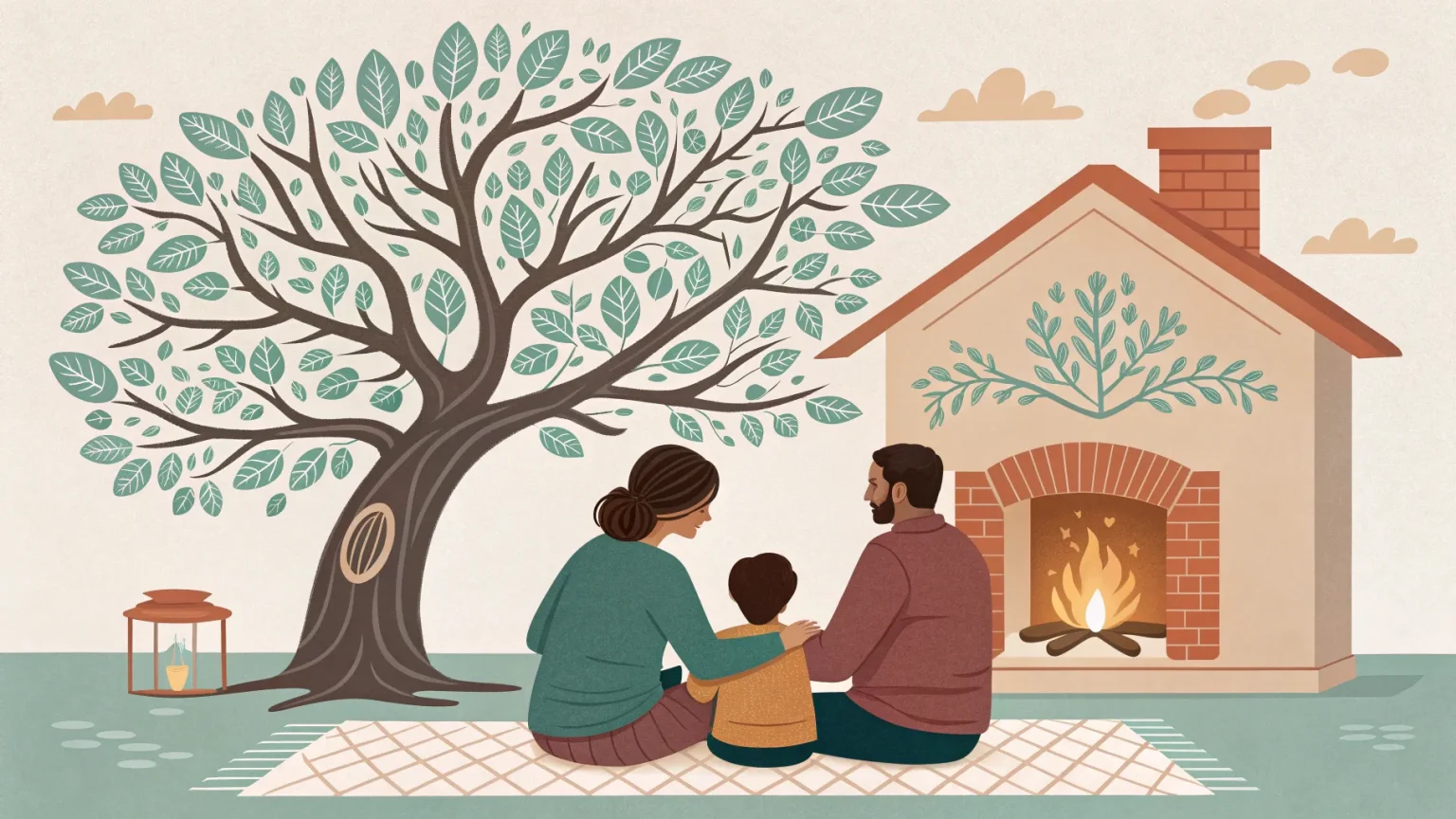
Every business fights to be seen. They use logos, slogans, and style. Families should do the same. My view is simple: every family needs a crest or logo. Not for show. For identity, unity, and legacy. This matters because too many kids inherit money without meaning. A symbol can fix that. It turns a last name into a living story.
Heritage Beats Inheritance
Money without meaning creates drift. I have watched it with clients. Kids get cash but not purpose. They don’t know who they are. A crest changes that. It gives values a shape. It gives a family a language. It makes traditions visible and repeatable.
I’m not talking about a fancy shield on a wall. I’m talking about a symbol that says, “This is who we are.” It’s a standard you can live up to. It’s an invitation to belong.
“Every business has a logo, right? Like a symbol… Why not have a family logo? Why not have a family crest?”
Symbols shape behavior. Kids remember what they can see. A crest ties actions to identity. It turns rules into values. It turns chores into contribution. It makes “our family” real, not just a label.

How We Built Ours
We made our crest when my kids were seven and nine. It was messy and loud, and yes, slow. I joked it was like chaos school.
“That was like hurting cats.”
But that chaos was the point. We designed it with them, not for them. We filled it with things that matter to us. We even added an inside joke. That joke connects us every time we see it.
“We have wings that talk about lifting each other up.”
Those wings became a ritual. When someone has a hard day, we ask, “How can we lift you?” The symbol cues the behavior. It’s not a rule. It’s a reminder.
We put the crest where we live life. On coolers. On cornhole boards. Not just on a letterhead.
“It’s just something that we look at and say, ‘This is what it means to be a Gunderson.’”
Heritage shows up in details. When kids help design it, they own it. They repeat it. They defend it. They pass it on.
“Isn’t This Cheesy?”
Some people roll their eyes. They say it’s branding your family. Or it’s shallow. I say the opposite. A crest is not about image. It’s about alignment. It links daily choices to shared values. It cuts through noise and trends. It holds up when life gets heavy.
Others worry it’s exclusive. I see it as welcoming. Anyone who joins the family gets invited into something clear and simple. It’s a key to connection.
What A Crest Can Do
I’ve coached many high earners. The ones who win at home build culture, not just accounts. A crest helps by making values visible and repeatable in small ways every day.
- It turns vague values into a clear standard.
- It builds pride without arrogance.
- It makes family meetings less boring and more real.
- It helps kids make choices when you’re not there.
- It bonds new members through a simple story.
You don’t need perfect art. You need meaning. Keep it simple. Make it yours.
Get Started This Week
Here’s how to begin without overthinking it. Aim for a first draft by Sunday. You can always update it later.
- Pick three values you live, not wish for.
- Choose a symbol for each value. Keep it obvious.
- Add one line or motto in your own words.
- Include one inside joke to keep it human.
- Place it where you gather: games, gear, or the kitchen.
- Use the crest in talk: “Is this who we are?”
Simple beats perfect. The goal is rhythm, not art. The symbol only works if you use it. Put it in play during family wins and misses. Celebrate with it. Reflect with it.
My Challenge To You
Stop outsourcing identity to brands. Give your kids something stronger than trends. Build a crest that says who you are and how you show up. Make your last name stand for heritage, not just an inheritance. Then live it out loud.
Start the draft. Put it on something you’ll see this week. Call a quick family huddle. Ask one question: “What does it mean to be us?” Then listen, draw, and decide. That’s how legacy begins.


