

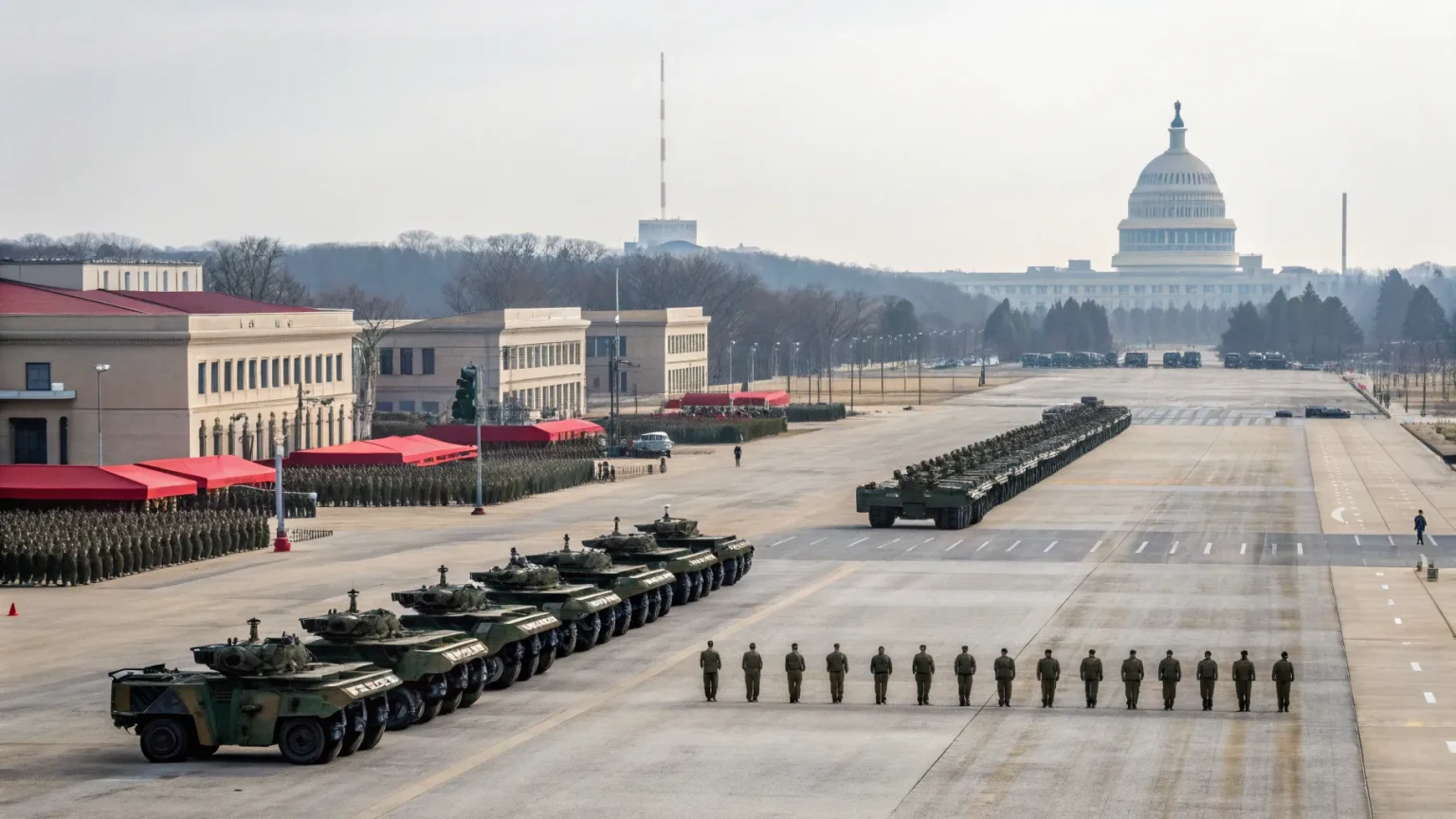
Defense shares moved higher on Monday after Secretary of War Pete Hegseth called a meeting of military leaders at Quantico, with President Trump expected to attend. The planned gathering, set for Marine Corps Base Quantico in Virginia, drew swift attention from investors who often view high-level security consultations as a sign of possible spending priorities or operational shifts. Traders pushed up defense names as they weighed what the session could mean for near-term policy and procurement.
Market Reaction and What We Know
Early reports pointed to broad gains across major defense contractors and sector-focused exchange-traded funds. Investors commonly rotate into companies tied to aerospace, weapons systems, and logistics when expectations rise for new programs or accelerated contracting.
“Defense stocks trade higher as War Secretary Pete Hegseth calls for meeting of military leaders in Quantico, with President Trump to attend.”
The meeting’s agenda was not immediately clear. However, the guest list suggests a focus on operational readiness and funding. Quantico is home to Marine Corps training, research, and doctrine development, making it a practical venue for discussions that blend strategy and capabilities.
Why Quantico Matters
Quantico has long served as a hub for military planning and professional education. It houses the Marine Corps War College and other institutions that shape doctrine and leadership. A convening there signals coordination at a senior level, often linking policy aims with the services’ on-the-ground needs.
Investors pay attention to such settings because budget priorities can surface in closed-door briefings. If leaders discuss force structure, munitions stockpiles, or modernization timelines, suppliers may later see changes in orders and delivery schedules.
Implications for Defense Contractors
Companies positioned in missiles, air defense, and communications typically benefit when strategic risk rises or when procurement gains momentum. Large contractors, such as Lockheed Martin, Northrop Grumman, Raytheon Technologies, and General Dynamics, sit at the center of these discussions, given their extensive portfolios across air, land, sea, space, and cyber systems.
Smaller firms in training, simulation, and secure networks can also benefit from prioritizing readiness and resilience. Logistics and maintenance providers may benefit from a focus on sustaining and replenishing equipment already in service.
Policy Signals and Political Context
The presence of a sitting president at a military leaders’ session is rare and often read as a show of support for the services. It can also presage announcements on procurement, troop posture, or industrial base policy. Even without specific statements, such appearances can move expectations for near-term appropriations or reprogramming of funds.
Past periods of heightened defense attention have led investors to seek safety in cash-flow-heavy contractors. Markets generally price in the stability of government demand, even when broader conditions are volatile. That calculus can shift quickly if policymakers point to spending trade-offs or budget caps.
What Investors Are Watching
With details scarce, market participants are scanning for updates from the Pentagon and the White House. Analysts say the following signals could shape the sector’s next move:
- Any mention of accelerated procurement in munitions, air defense, or command-and-control.
- Guidance on stockpile replenishment and sustainment funding.
- Indications of new overseas commitments or posture changes.
- Potential shifts in industrial base policy, including supply chain security.
Historical Context and Risk
Defense shares often gain on headlines that hint at higher spending, but rallies can fade if policy outcomes fail to materialize. Earnings guidance from contractors remains a key indicator of sentiment, particularly when supply chain constraints, labor availability, or cost inflation impact delivery schedules. Contract timing can also inject volatility, as single awards move revenue forecasts.
Long-term investors focus on backlog growth and free cash flow, which are less sensitive to daily news but are crucial for dividend and buyback plans. Those metrics depend on steady appropriations and program stability over multiple years.
For now, the sector’s uptick reflects a familiar playbook: when high-level security meetings draw the president and top brass, markets anticipate clearer direction on spending and priorities. Concrete outcomes may take time, but even the hint of alignment between military needs and political focus can lift sentiment. The next clues will likely come from official readouts or budget signals. Investors will be looking for firm commitments, timelines, and guidance on which programs stand to move first.


