

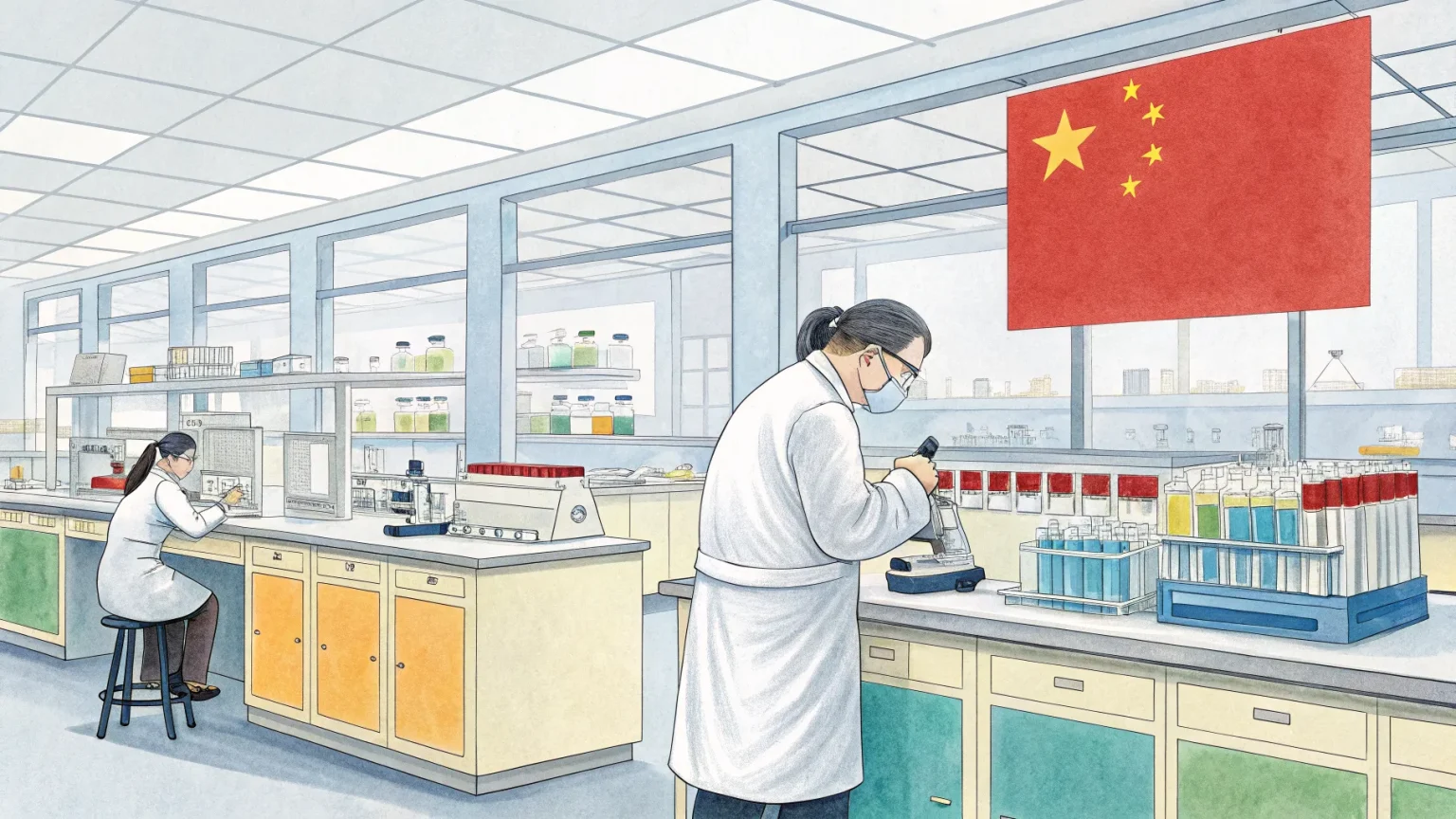
China’s push into biotechnology is reshaping its drug industry, forcing local companies to balance speed, price pressure, and global ambition. At stake is whether rapid growth drives true innovation or adds strain to firms already facing tight margins.
The question has sharpened as new therapies, manufacturing capacity, and capital continue to pour into the sector from Shanghai to Shenzhen. Domestic champions are seeking approvals abroad while navigating strict price negotiations at home. Investors, regulators, and patients are watching to see who can turn momentum into lasting gains.
A Fast-Rising Sector With New Rules
Over the past decade, China overhauled drug approvals and opened financing channels. Policies such as the Marketing Authorization Holder reform sped up development. Listing pathways in Hong Kong allowed pre-revenue biotechs to raise funds, while Shanghai’s STAR Market offered another venue for high-growth firms.
Regulators also accelerated reviews and joined international standards, cutting time to market for many drugs. At the same time, national price talks and volume-based procurement lowered costs for patients but slashed revenue per product. That trade-off now defines the market.
“Will China’s booming biotech industry be just what the doctor ordered for industry innovation or a new pain point for domestic drugmakers?”
This framing captures the dilemma facing executives and researchers across the country.
Winners and Pressure Points
Several companies have reached global milestones. BeiGene’s BTK inhibitor won US approval and posted strong head-to-head data, signaling that China-originated drugs can lead in certain categories. Junshi Biosciences, working with a US partner, secured an FDA nod for a therapy in nasopharyngeal carcinoma, a cancer with a high burden in Asia.
Yet competition at home is fierce. The “PD-1 race” produced multiple similar products, driving down prices. Many firms rely on one or two assets and face cash burn as trials expand. After a funding surge from 2018 to 2021, tighter capital markets forced teams to prioritize projects and cut non-core programs.
Analysts say the next phase will reward clear differentiation, not copycat strategies. First-in-class or best-in-class data, clean safety profiles, and precise patient selection are becoming the key measures.
Global Ambitions Meet Geopolitics
To offset domestic price pressure, Chinese biotechs are pushing abroad. They are adding global trial sites, hiring regulatory experts, and signing out-licensing deals. Partnerships with multinational companies offer commercial reach and validation.
But the external path is not simple. Geopolitical tensions raise scrutiny of cross-border data flows and supply chains. US and EU regulators expect diverse patient data, rigorous trial design, and manufacturing that meets strict inspections. Several high-profile applications have faced delays or rejections, showing that “good enough” is not enough in top markets.
Hospitals, Patients, and the Innovation Test
At home, hospitals must balance cost controls with access to advanced therapies. National insurance lists have brought many cancer and rare-disease drugs to patients at lower prices. The trade-off is pressure on companies to deliver volume and maintain stable supply.
Clinicians are asking for stronger evidence from head-to-head studies, real-world data, and longer follow-up. The move from me-too drugs to new mechanisms is underway but uneven. Cell and gene therapies, bispecific antibodies, and RNA-based medicines are entering clinical stages, with manufacturing quality a central concern.
Signals to Watch
- Pipeline mix: Fewer redundant PD-1s and more novel targets in oncology and immunology.
- Trial quality: More multinational studies with diverse enrollment and clear endpoints.
- Pricing strategy: Smarter launch sequencing, patient assistance, and outcome-based pilots.
- Partnerships: Cross-border co-development and regional licensing that share risk and speed access.
- Manufacturing: Consistent quality for biologics and cell therapies under stricter inspections.
What Comes Next
China’s biotech sector enters a make-or-break period. Those that pair strong science with disciplined development and real differentiation can scale at home and abroad. Others may consolidate or exit as funding tightens and price pressure persists.
The near-term outlook depends on clinical readouts, overseas approvals, and the pace of policy refinements. If firms shift from crowded categories to novel science—while meeting global standards—patients could gain earlier access to advanced treatments and the sector could mature into a stable growth engine.
For now, the central question remains open. The industry’s growth has brought energy and access, but also new stress. The answer will hinge on whether breakthroughs outpace the squeeze from competition and cost control in the years ahead.


