

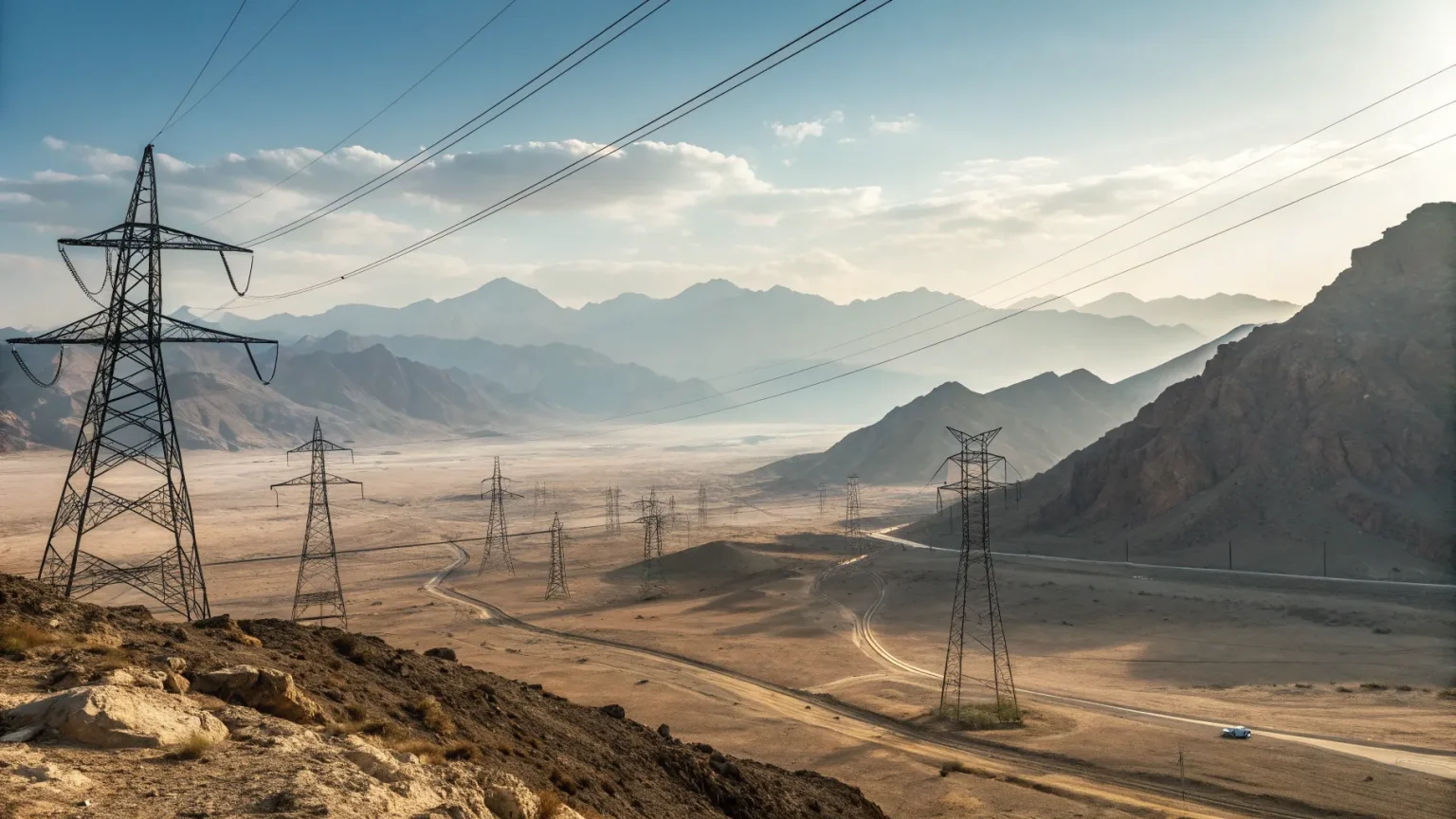
China is racing to stitch together a nationwide web of ultrahigh-voltage power lines that move wind and solar power over vast distances from interior deserts to eastern cities. The buildout, underway this year across multiple provinces, aims to reduce coal dependence, cut air pollution, and maintain a stable supply to factories and households as electricity demand increases.
Engineers are erecting lines that can run hundreds or even thousands of miles. Officials say the lines will connect remote generation in Inner Mongolia, Gansu, Qinghai, and Xinjiang to coastal hubs near Shanghai, Guangzhou, and other industrial centers. Public resistance has been muted, allowing work to proceed at speed under a centralized push.
“China is building a network of ultrahigh-voltage power lines to carry solar and wind energy hundreds and even thousands of miles as few citizens dare to protest.”
Why Transmission Is Central
China’s biggest wind and solar fields sit in sparsely populated regions rich in land and sun. The power is often far from where most people live and work. Without long-distance lines, clean energy can go unused, a loss known as curtailment. Planners view ultrahigh-voltage corridors as the main fix, helping smooth supply across time zones and weather patterns.
Long lines also backstop a grid under stress. Heat waves, droughts, and cold snaps have triggered periodic shortfalls. Moving power from surplus regions to deficit regions gives operators more options when demand surges.
Engineering at Continental Scale
China’s grid companies have spent years refining ultrahigh-voltage direct current and alternating current systems that can ship electricity with fewer losses over long distances. These projects require large converter stations, extensive rights-of-way, and careful coordination with regional grids.
New corridors link desert solar in the northwest and grassland wind in the north to factories in the east and south. Typical routes stretch from Xinjiang and Gansu to the Yangtze River Delta and Pearl River Delta. Each line can carry power equivalent to the output of multiple large coal plants.
Analysts say transmission costs are high upfront but drop when spread over decades of operation. The lines unlock access to cheaper generation sites and allow more hours of output from renewable plants.
Politics, Communities, and Consent
Public opposition to new power corridors is limited. China’s top-down infrastructure model speeds approvals, land access, and construction. Environmental reviews and resettlement plans fall under the oversight of both central and provincial authorities.
Some residents raise concerns about land use, towers on farmland, or the impact on wildlife. Labor groups also track worker safety on remote projects. These debates remain subdued in public forums, and projects rarely face years of delays seen elsewhere.
- Minimal public protest shortens project timelines.
- Local worries focus on land, health, and habitats.
- Officials emphasize the importance of energy security and reducing pollution.
Economic Stakes and Industry Impact
Affordable and reliable power is a priority for manufacturers, ranging from steel production to electric vehicles. The new lines promise fewer bottlenecks, which can lower power prices in high-demand regions. Grid access also encourages private and state developers to add more wind and solar capacity in interior provinces.
Coal remains a significant share of generation, but long-distance links make it easier to retire older plants near cities while maintaining power supply. Gas peakers and hydropower still play a role in balancing, yet transmission gives grid operators a bigger toolkit.
Global Lessons and Risks
Other countries are watching. The United States and parts of Europe have struggled to build large transmission due to permitting fights and local challenges. China shows what a rapid build can look like, though the approach raises questions about community voice and environmental safeguards.
Technical risks include bottlenecks at interconnections and the need for advanced control systems to manage variable generation. Market risks include stranded assets if demand shifts or if distributed energy grows faster than expected in the east.
What Comes Next
More ultrahigh-voltage corridors are planned to match the rapid expansion of wind and solar capacity. Grid operators are testing storage and digital controls to handle sharp swings in output. Cross-region scheduling reforms aim to move power more efficiently and cut wasted energy.
Fewer curtailments, stable prices, and lower emissions in coastal cities will measure the success of the buildout. It will also hinge on how well planners manage land, wildlife, and worker safety during construction and operation.
China’s bet is clear: build big transmission to unlock clean energy at scale. If the lines deliver, factories and homes could see steadier, cleaner power. If they stumble, bottlenecks and local impacts could grow. Over the next two to three years, as new routes come online, it will become clear whether this strategy can meet the nation’s rising demand while reducing pollution.


