

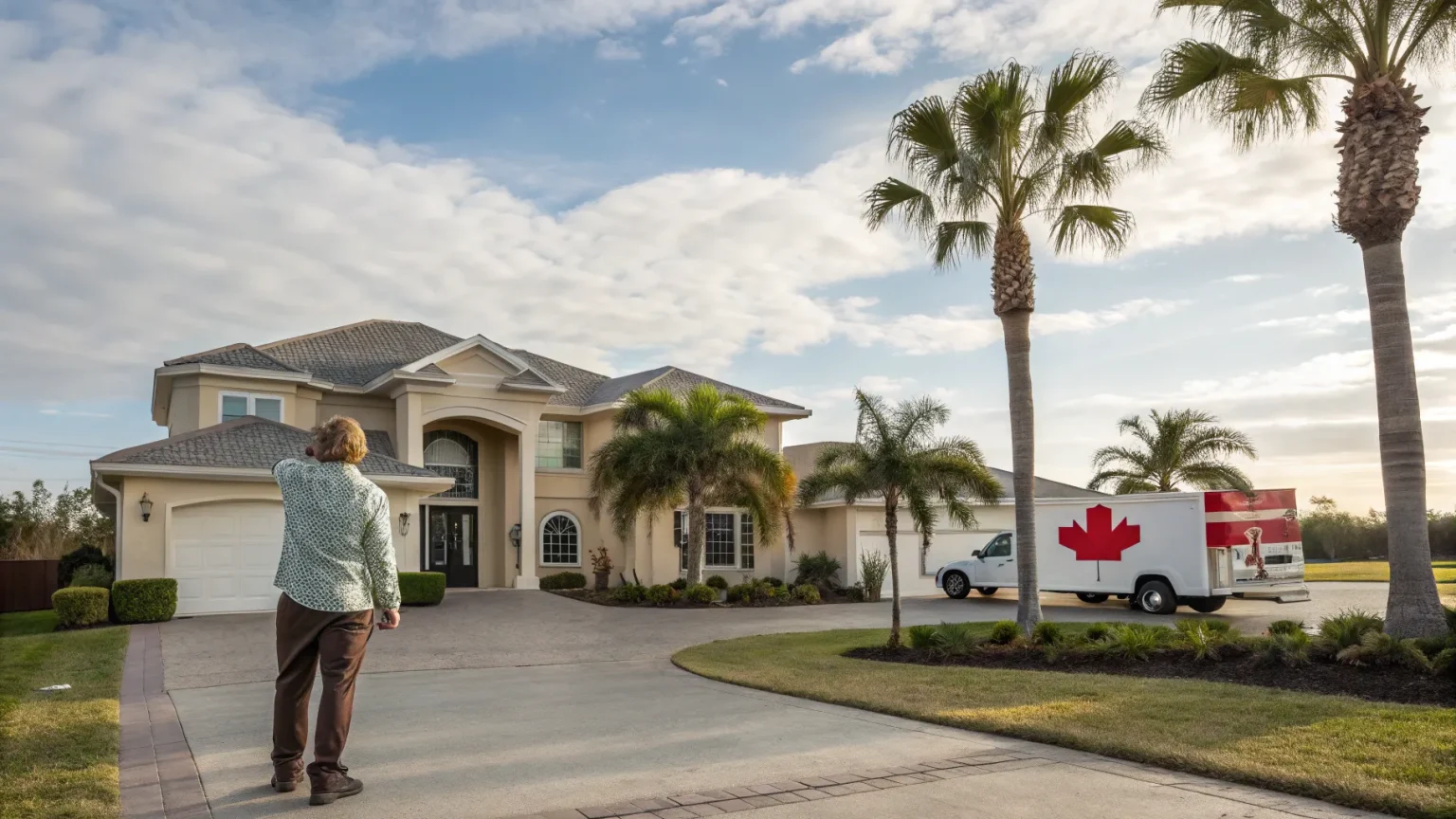
Canadian homeowners are selling Florida properties amid currency swings, trade questions, and shifting feelings about their place in the United States, according to a South Florida luxury broker. The trend, while not universal, is strong enough to be felt in popular “snowbird” communities and raises new questions for a market that has long relied on seasonal buyers from Canada. It comes at a time when exchange rates and policy debates are adding friction to cross-border life.
Senada Adzem, a top agent with Douglas Elliman in Boca Raton, said recent seller conversations are different from past years. The concerns are no longer just about prices or mortgage rates. They extend to geopolitics and comfort.
“Canadian sellers are citing currency volatility, trade uncertainty — and a sense they don’t feel as welcome in the U.S. — as they leave Florida,” said Adzem.
A Long Bond Faces New Pressures
For decades, Canadians have been a fixture in Florida’s housing market, drawn by warm winters, direct flights, and familiar communities. Industry surveys have often ranked Canadians among the largest groups of foreign buyers in the state, especially in coastal counties. Many prefer cash purchases and condos near beaches or golf courses.
That bond has been tested before. The global financial crisis cut travel and spending. The pandemic caused border restrictions and logistical hurdles. Yet Canadians returned, buoyed by equity gains at home and lifestyle priorities in retirement.
This latest wave of selling is tied more tightly to currency math and sentiment. The Canadian dollar has spent much of the past two years trading well below parity with the U.S. dollar, often in the low- to mid-70-cent range. For owners who bought when the loonie was stronger, keeping a Florida home now means higher effective costs for taxes, insurance, and maintenance when converted back to Canadian dollars.
Exchange Rates and Insurance Costs
Economic pressure shows up in monthly bills. Property insurance premiums in Florida have climbed in recent years due to storm losses, litigation, and reinsurance costs. While trends vary by county and property type, many owners report sharp increases in coverage and stricter terms. Condo associations have approved special assessments to meet new safety and reserve rules after the Surfside collapse in 2021, adding another expense layer.
Combine those bills with a weaker loonie and U.S.-priced services, and the math gets tough for part-time residents on fixed incomes. Sellers can also benefit from the strong dollar on exit, realizing gains in Canadian currency when they repatriate proceeds.
- Weaker Canadian dollar raises ongoing costs for U.S.-based expenses.
- Insurance premiums and association fees add pressure to carrying costs.
- Sales proceeds in U.S. dollars convert favorably back into Canadian dollars.
Trade Uncertainty and Social Signals
Adzem’s point on trade uncertainty taps a broader mood. U.S.-Canada trade ties remain strong, but periodic disputes over softwood lumber, electric vehicle rules, and border issues make headlines. Election seasons on either side of the border often bring tough talk that can unsettle second-home owners who plan years ahead.
The agent’s comments on feeling less welcome reflect a softer, but influential, factor. Some foreign owners say they are more attuned to debates over immigration, state-level political shifts, and local rules around rentals or residency. Even when policies have not directly changed their status, the perception of a cooler climate can prompt a sale, particularly among retirees who value predictability.
“It’s not just dollars and cents,” Adzem added in recent client discussions, describing a mix of practical and emotional reasons behind listings.
Market Impact and What Comes Next
Florida’s housing market is large and varied, so regional effects differ. Agents in Palm Beach, Broward, and Miami-Dade describe a steady stream of international activity from Latin America and Europe. Domestic migration from the Northeast and Midwest remains a strong force in single-family segments. In that mix, a rise in Canadian listings may nudge pricing in condo-heavy submarkets, especially older buildings facing large assessments.
Developers and associations are responding by offering clearer reserve planning, insurance strategies, and flexible rental policies where allowed. Some buyers from Canada are trading down to lower-cost properties rather than leaving entirely. Others are shifting to shorter seasonal rentals to reduce risk.
Economists say the outlook will hinge on three variables: the exchange rate, Florida insurance reform outcomes, and cross-border policy signals. A stronger Canadian dollar would ease pressure. Durable insurance relief could stabilize carrying costs. And calmer trade rhetoric would help restore confidence among part-time residents.
For now, agents report more “for sale” calls from Canadian owners than a year ago, even as U.S. buyers continue to tour open houses. The pull of sun and community is still there. But budgets and comfort levels are doing more of the talking.
Adzem’s comments point to a shift that could reshape who owns and stays in Florida’s prime winter corridors. Watch the loonie, the legislative calendar, and insurance renewals. If those trend in a friendlier direction, the tide may turn again. If not, more Canadian snowbirds may choose to fly home for good.


