

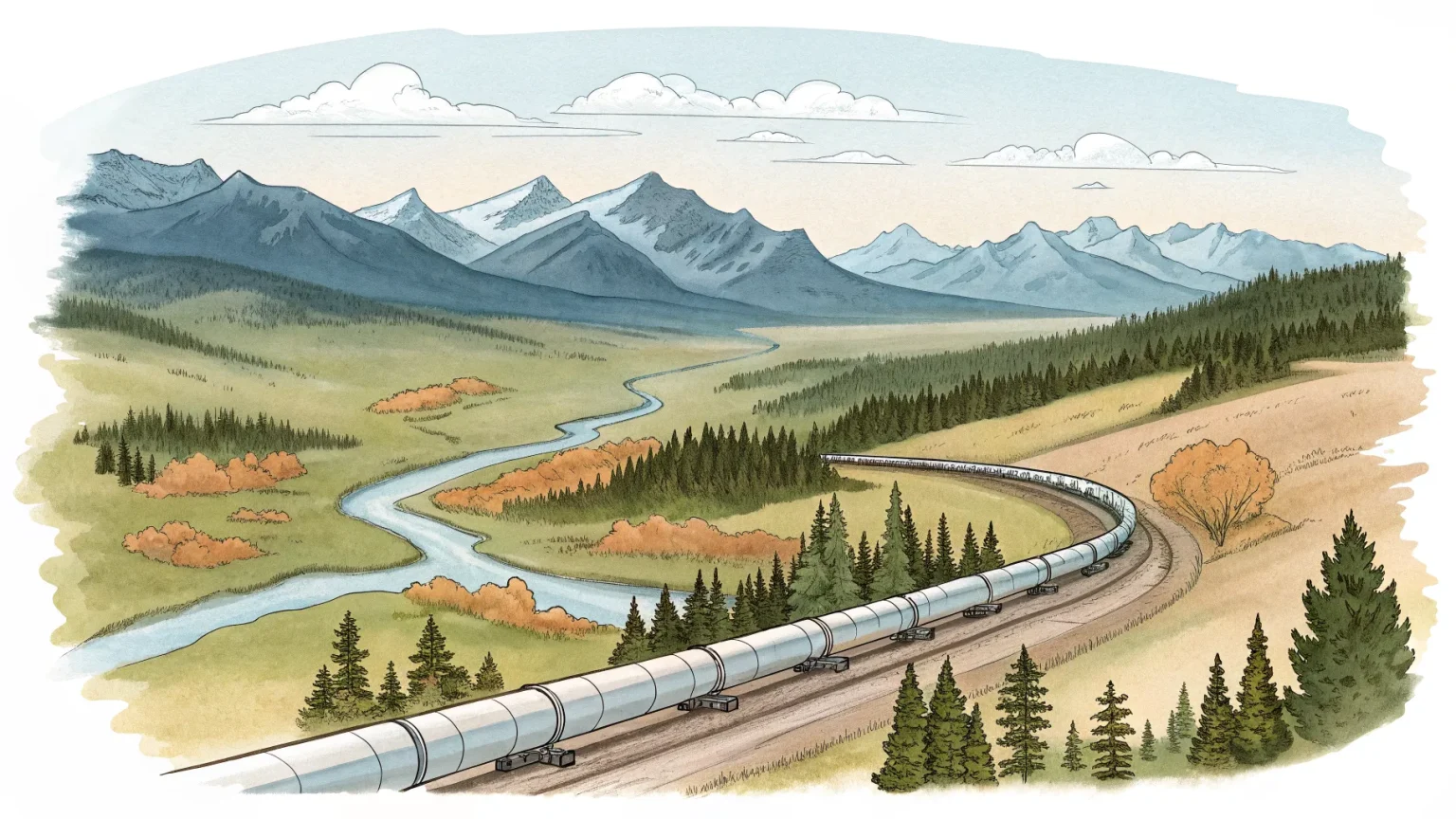
A new cross-border oil pipeline linking Canada to Wyoming is under discussion, with backers eyeing a shortcut that could lower costs and speed construction. The idea would reuse materials and sections associated with the cancelled Keystone XL project, which was halted in 2021. The proposal surfaces as North American crude flows shift and demand for reliable transport remains strong.
New pipeline proposed to carry oil from Canada to Wyoming could potentially piggyback off pipe laid for the cancelled Keystone XL.
The plan would route Canadian crude to refineries and storage hubs in the Rocky Mountain region. The timing, scope, and sponsors have not been publicly detailed. Any cross-border line would face federal review and years of permitting. Still, the concept signals renewed interest in adding outlets for Western Canadian oil.
Background: Keystone XL’s Legacy and Leftover Assets
Keystone XL was designed to move up to 830,000 barrels per day from Alberta to Nebraska, where oil would enter existing networks to reach the Gulf Coast. Construction started in limited areas in 2020, but the U.S. permit was revoked in early 2021. Work stopped. Large volumes of pipe had already been manufactured. Some ground work and ancillary infrastructure were completed, mainly in Canada and at select U.S. sites.
Industry analysts say reusing existing materials or rights-of-way could lower costs. It may also reduce environmental disturbance on new land. However, any reuse would still trigger rigorous reviews, landowner agreements, and tribal consultations. It would not provide a free pass on safety or climate assessments.
What a Canada-to-Wyoming Line Could Change
Wyoming hosts refineries and storage tied to regional fuels markets. A direct link from Canada could give Rocky Mountain operators steadier supplies. It may also create new routing options during outages on other lines or rail bottlenecks.
- Supply: Added access to Canadian heavy and medium crude for regional plants.
- Resilience: Alternate path if other pipelines face maintenance or weather issues.
- Pricing: Potential to narrow transport costs and regional price gaps.
- Employment: Construction jobs during build-out and maintenance roles long term.
Canada exports more than 3 million barrels per day of crude to the United States. Most flows run to the Midwest and Gulf Coast. The Trans Mountain expansion, which began service in 2024, shifted some barrels west to the Pacific. Even so, production growth in the oil sands keeps pressure on takeaway capacity. A Wyoming route would diversify paths to market but would be modest compared with major trunklines.
Regulatory Hurdles and Legal Questions
A new cross-border pipeline needs a presidential permit after a State Department review. Federal agencies would conduct environmental analysis under the National Environmental Policy Act. States and counties would add their own permits for water crossings, construction, and safety.
Developers would need to secure easements from private landowners and consult with tribes along the route. Reusing any installed segments would still require proof that integrity, location, and easements meet current standards. Insurance, bonding, and emergency response plans would be scrutinized after recent high-profile spills across North America.
Environmental Concerns and Community Views
Environmental groups are likely to question new fossil fuel infrastructure. They argue the project could lock in emissions by extending the life of oil sands production. Landowners often raise spill risks and property impacts. Tribes have pressed for stronger cultural and water protections on past projects.
Supporters point to pipeline safety data and argue lines are safer than crude by rail. They also cite energy security and stable supplies for regional economies. Any review will weigh these competing claims and the project’s climate footprint, including upstream emissions.
Market Outlook and Alternatives
Refiners in the Rockies blend local and imported barrels to meet fuel demand in surrounding states. Rail and existing pipelines already move Canadian crude into the interior. A direct Canada-to-Wyoming link could improve reliability during rail disruptions and winter weather.
Still, the market is changing. Electric vehicles are growing, and fuel efficiency is improving. Long-term demand growth is uncertain. Some refineries have shifted to produce renewable diesel, while others plan upgrades for heavier crudes. A new line must pencil out under varied price and demand scenarios over decades.
Comparisons with cancelled or delayed projects show that timelines can stretch. Even with partial reuse of materials, major permitting and construction often take years. Financing hinges on firm shipping commitments from producers and refiners, which must see clear value beyond current options.
The proposal highlights a familiar tug-of-war between energy supply, climate goals, and local impacts. If sponsors advance the plan, the first tests will be transparent routing, early community engagement, and credible spill response strategies. Investors will watch for long-term contracts and a clear path through federal and state approvals.
For now, the idea signals that the debate over Canadian crude routes is not settled. The next steps will show whether a Wyoming terminus can gain support, clear legal reviews, and deliver cost and safety benefits. Watch for a formal filing, maps of a preferred route, and details on how much Keystone XL material can truly be reused under today’s standards.


