

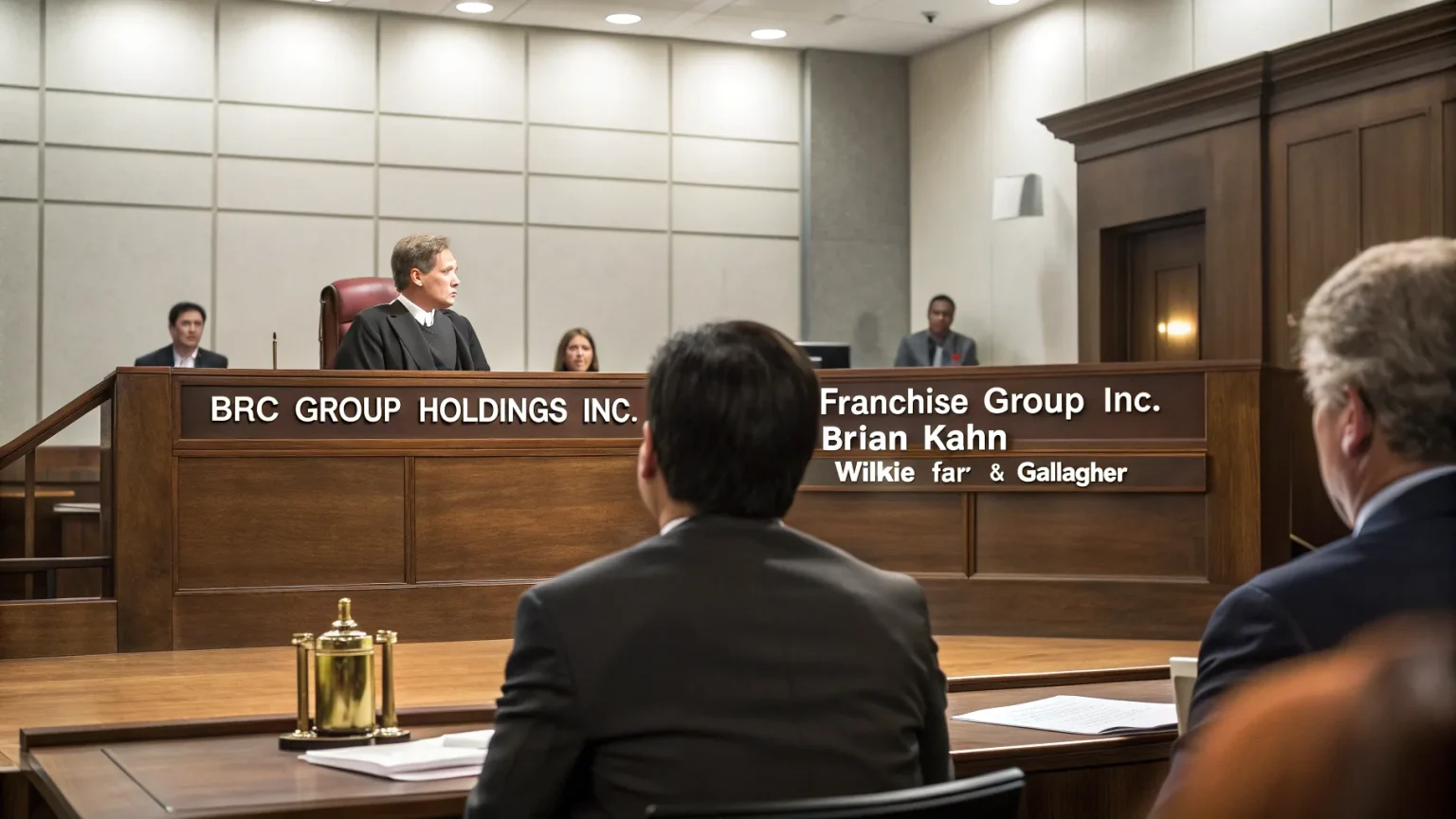
BRC Group Holdings Inc. has filed a fraud lawsuit against Franchise Group Inc. founder Brian Kahn and the law firm Willkie Farr & Gallagher over the 2023 deal that took FRG private. The action targets the leader behind the buyout and the legal advisers who helped structure it. The complaint signals a high-stakes dispute over what investors were told and who bears responsibility if facts were withheld or misrepresented.
The company, rebranded from B. Riley, says the case centers on events linked to the take-private transaction. It marks a rare challenge that ropes in both a key dealmaker and a major law firm. Investors and corporate boards will be watching because the outcome could shape how advisers document risks and how buyers communicate during sensitive negotiations.
Background: A Rebrand and a Take-Private
BRC Group Holdings Inc., formerly B. Riley, is known for advising, investing, and financing across public and private markets. Franchise Group Inc. operated a collection of consumer and retail businesses. In 2023, FRG was taken private, removing it from public markets and shifting oversight to a smaller group of owners.
Take-private deals can be complex. They often unfold under tight timelines and heavy confidentiality. Buyers seek favorable terms, while sellers seek certainty and fair value for shareholders. Disclosures, diligence, and adviser sign-offs play a central role in managing risk and aligning incentives.
When disputes arise after closing, plaintiffs often point to what was said—or not said—during negotiations. Fraud claims commonly hinge on alleged misstatements, omissions, reliance, and damages. Courts examine whether parties had a duty to disclose specific information and whether the other side reasonably relied on those statements.
The Core Allegation
BRC Group Holdings Inc., the firm rebranded from B. Riley, filed a fraud lawsuit against Franchise Group Inc. founder Brian Kahn and the law firm that advised it, Willkie Farr & Gallagher, over FRG’s deal to take the company private in 2023.
This statement frames the dispute around two focal points: the founder who led FRG’s buyout and the outside counsel that advised on the deal. While the filing’s full details were not disclosed here, fraud claims in deal settings often center on what information drove valuation, how risks were disclosed, and whether parties adhered to legal and professional duties.
Legal Stakes and Adviser Liability
Suing a founder is common in post-deal disputes, but pulling in a law firm heightens the stakes. Such cases test the limits of adviser liability and the expectations boards place on their legal teams. Plaintiffs typically must show specific false statements or material omissions and a direct link to financial harm.
Law firms argue their role is to provide legal advice based on information supplied by clients and counterparties. Founders and buyers argue they negotiated in good faith and relied on data available at the time. Courts weigh engagement letters, diligence records, and transaction communications to resolve who knew what and when.
Investor Confidence and Market Signals
High-profile fraud claims can chill deal activity. Boards may demand more thorough diligence steps, added representations and warranties, and tighter closing conditions. Insurers may reassess risk and pricing for deal-related coverage. For sellers, this can mean longer timelines and higher costs.
For buyers, the case is a reminder that aggressive timelines and optimistic forecasts can draw scrutiny after closing. For advisers, it raises pressure to document risk factors, client instructions, and the basis for key opinions with greater care.
- Boards: Expect stronger audit trails and more independent checks.
- Buyers: Anticipate wider data rooms and stricter disclosure schedules.
- Advisers: Prepare for closer review of engagement scope and sign-offs.
What to Watch Next
Cases like this often start with procedural sparring. Defendants may seek dismissal by arguing the claims lack specificity. If the case proceeds, discovery can surface emails, diligence memos, fairness analyses, and board materials. Those records often decide outcomes or drive settlement talks.
Potential outcomes range from dismissal, to negotiated resolution, to trial. Along the way, investors will look for signals about disclosure standards, the scope of adviser duties, and how courts view reliance in complex transactions.
This lawsuit taps into a broader concern among public-company boards about valuation, disclosure, and accountability in take-private deals. It also reflects rising sensitivity to how legal and financial advisers frame risk during negotiations.
The filing places fresh scrutiny on the FRG transaction and the roles played by its founder and legal counsel. The next steps in court will determine whether the fraud claims advance. For dealmakers, the larger lesson is clear: stronger documentation, clearer disclosures, and well-defined adviser roles can reduce the chance of costly disputes later.


