

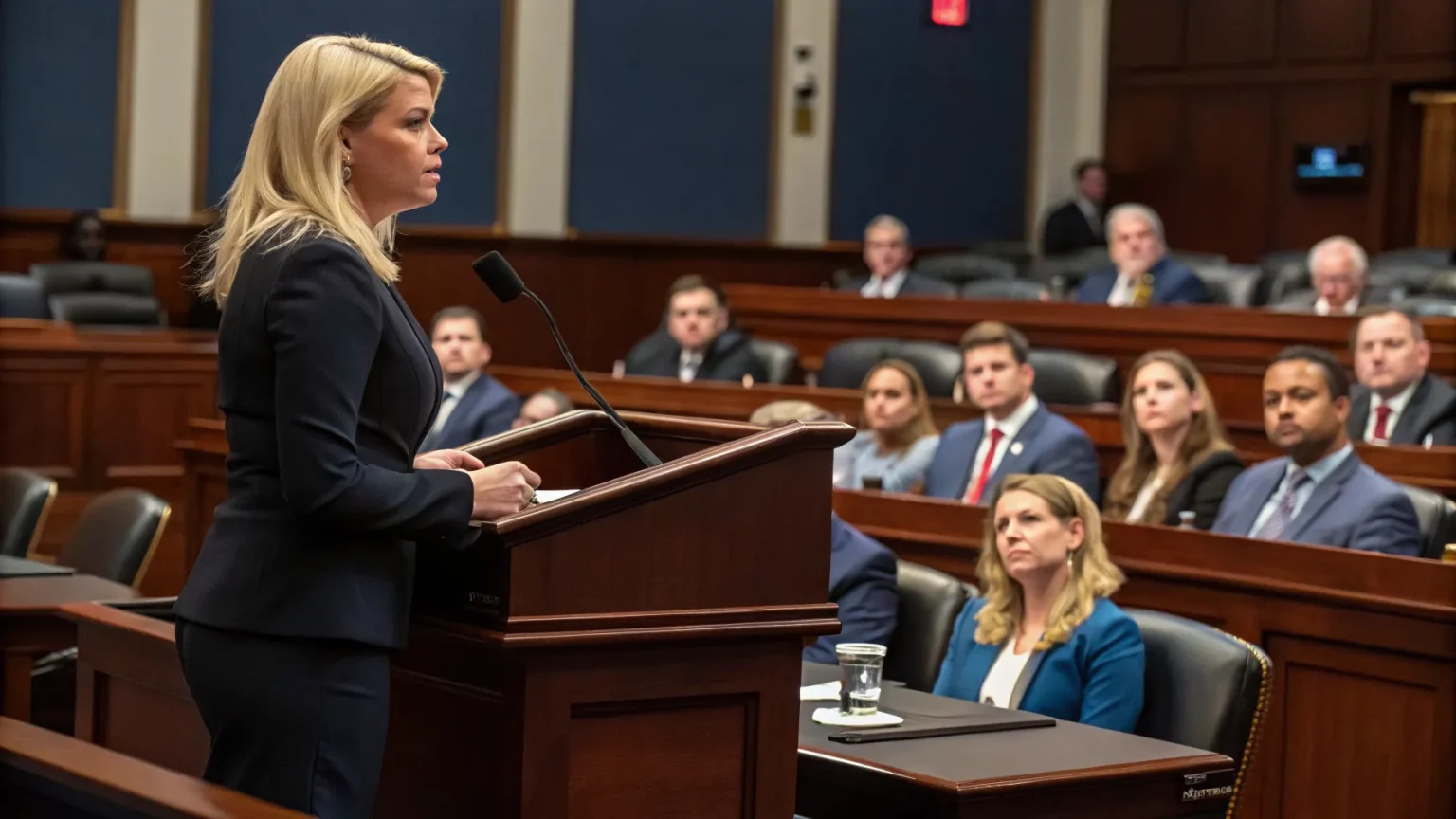
Former Florida Attorney General Pam Bondi mounted a forceful defense of Donald Trump on Wednesday during a heated hearing over the Justice Department’s handling of the Jeffrey Epstein files. The clash, marked by raised voices and sharp exchanges, unfolded as lawmakers pressed for answers on what was released, what remains sealed, and why. Bondi, a prominent Trump ally, positioned herself as the former president’s most vocal guardian while Democrats pressed their oversight case.
Background: A Fight Over Files and Accountability
The Epstein case has lingered in public life for years, with victims and advocates calling for full transparency. Epstein died in federal custody in 2019 while awaiting trial on sex-trafficking charges. Since then, questions about past plea deals, charging decisions, and the release of related documents have driven bipartisan criticism of law enforcement.
Democrats on the panel focused on whether the Justice Department has moved fast enough to release records and answer victims’ questions. Republicans argued that the inquiry risks turning into a partisan spectacle that strays from legal standards and due process. Bondi took the latter view, tying the dispute to what she framed as ongoing efforts to damage Trump ahead of the election cycle.
Bondi’s Defense and the Hearing’s Flashpoints
Attorney General Pam Bondi launched into a passionate defence of Donald Trump on Wednesday as she tried to turn the page from relentless criticism of the Justice Department’s handling of the Jeffrey Epstein files, repeatedly shouting at Democrats during a combative hearing in which she postured herself as the Republican president’s chief protector.
Bondi’s argument centered on the idea that Trump is being unfairly linked to disputes over case records. She stressed that oversight should not become a proxy battle over personalities or campaign politics. Her approach energized Republicans on the panel, who echoed her warnings about overreach.
Democrats countered that the core issue is public trust. They argued that the Epstein case demands a full accounting, including detailed timelines of investigative steps and a clear plan for producing documents that can be lawfully released. Several members pointed to the concerns of survivors who have long sought answers.
Competing Priorities: Transparency, Privacy, and Due Process
At the center of the dispute lies a familiar tension. Lawmakers are weighing the public’s right to know against legal limits on releasing sensitive files, including grand jury material and records tied to ongoing investigations. That push and pull has stalled previous document requests and fueled speculation about undisclosed details.
- Transparency advocates want a schedule for document releases.
- Law enforcement officials cite privacy protections and legal constraints.
- Victims’ groups urge clarity and consistency to prevent confusion.
Bondi aligned with those urging caution, saying the committee should not pressure the Justice Department into premature disclosures. Democrats pressed for concrete steps and deadlines, warning that delays erode confidence in institutions.
Implications for Policy and Politics
Wednesday’s hearing may set the tone for a broader fight over access to sensitive records. If the committee issues new subpoenas or outlines a timetable for document production, the Justice Department could face renewed legal challenges and public scrutiny.
The political stakes are high. Republicans see an opportunity to frame the inquiry as partisan, while Democrats argue that careful oversight is necessary to serve victims and restore trust. Bondi’s prominence in the hearing suggests a continued effort by Trump’s allies to push back on investigations they view as politically charged.
What Comes Next
Lawmakers signaled that follow-up actions are likely. Possible steps include closed-door briefings to protect sensitive information, public status reports on document processing, and consultations with victims’ counsel to ensure that disclosures do not retraumatize survivors.
Any resolution will depend on practical steps that balance openness with legal guardrails. That means clear criteria for release, a transparent appeals process for redactions, and ongoing communication with the public.
Wednesday’s showdown clarified the stakes but not the outcome. Bondi’s forceful defense rallied Republicans, while Democrats kept the focus on transparency and victim concerns. The next phase will test whether Congress and the Justice Department can craft a plan for disclosures that meets legal standards and public expectations. The measure of success will be simple: credible answers for victims and a record that the public can trust.


