

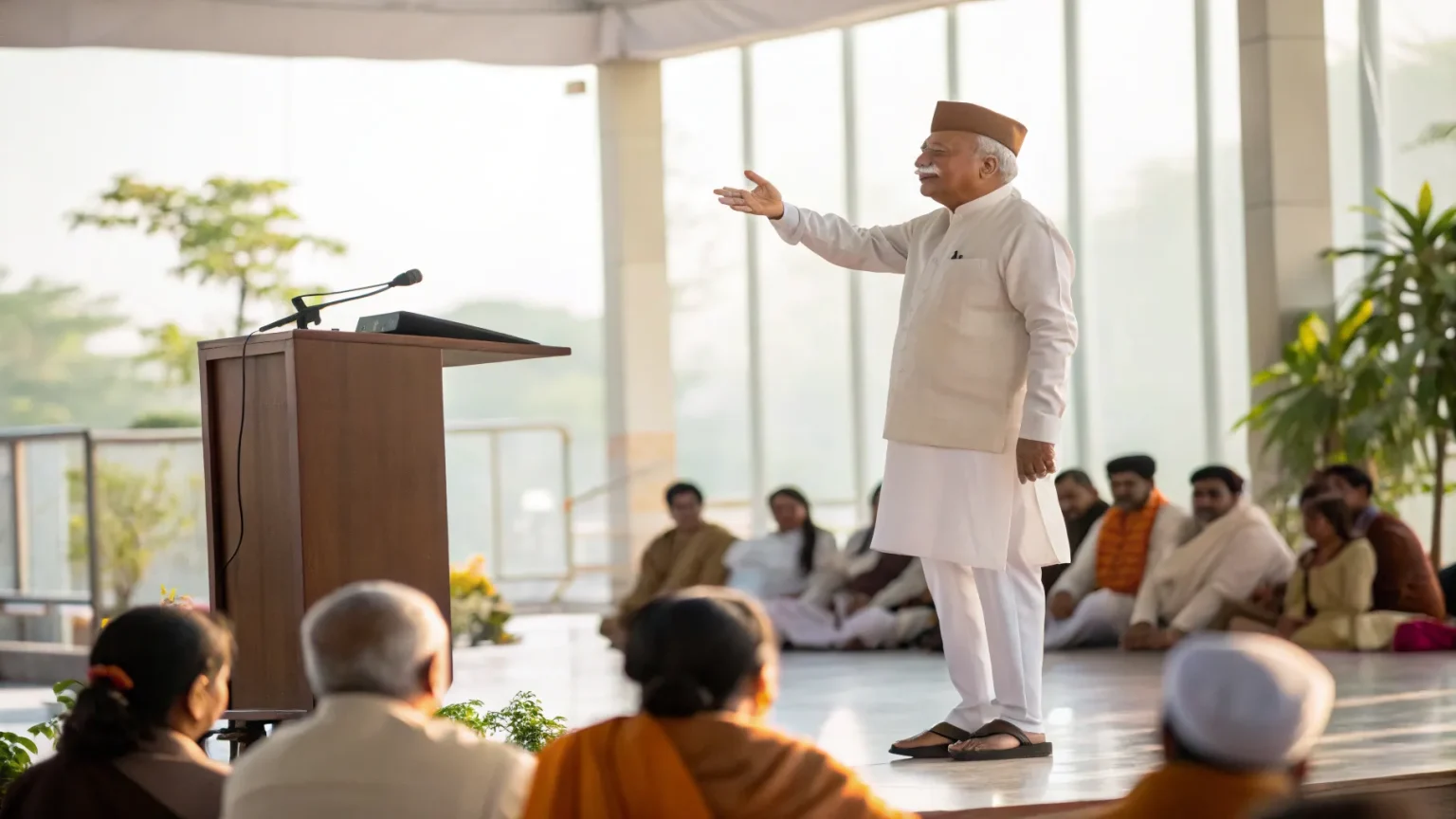
Rashtriya Swayamsevak Sangh chief Mohan Bhagwat on Sunday framed dharma as the driving force of existence and urged humility in public life. Speaking at an event titled Vihar Sevak Urja Milan, he said moral duty should guide society and leaders. His remarks come as debates over faith, governance, and social harmony remain central to India’s public conversation.
Bhagwat called for respect toward spiritual figures and reminded followers not to conflate service with divinity. He also referenced the Prime Minister’s deference to religious leaders. The message, delivered to a supportive audience, seeks to reinforce the RSS view that ethics rooted in tradition can shape national conduct.
Context Behind the Remarks
The RSS, founded in 1925, promotes cultural nationalism and community service. It is often described as the ideological mentor of the ruling Bharatiya Janata Party. Its outreach includes education, relief work, and campaigns on social cohesion.
Bhagwat’s focus on dharma reflects a long-standing theme in his addresses. He often links personal duty with civic responsibility. Supporters argue this provides a moral compass in a polarized climate. Critics counter that such emphasis risks blurring lines between faith and governance in a secular republic.
The latest comments arrive amid frequent public appeals for unity across caste and faith. They also follow periodic tensions over religious identity, which have tested law-and-order and community relations in several states.
What Bhagwat Said
“Dharma is the driving force behind all existence and also governs the entire universe.”
“Those who abide by the truth on which religion is based are called saints. Therefore, it is the duty of all of us to ensure the respect and protection of saints.”
“We should always keep in mind that we are doing the work of God, but we are not God.”
He added that the Prime Minister “hesitates to say ‘no’ to saints,” citing that as an example of regard for spiritual counsel. The emphasis on humility stood out. Bhagwat warned against arrogance while invoking public service as a sacred duty.
Reactions Across the Spectrum
Political analysts say the message seeks to place ethics at the center of public life without naming specific policies. They note that his stress on humility doubles as guidance for administrators and activists.
Civil society voices offered mixed views. Some praised the call to protect saints as a signal to prevent harassment of religious leaders. Others pointed to the Constitution’s secular framework and urged a clear boundary between personal faith and state action.
Scholars of religion said dharma has varied meanings, from moral order to social duty. They argued that translating it into modern governance demands care to protect minority rights and individual freedoms.
Implications for Public Life
The remarks may shape how allied groups frame campaigns on education, social welfare, and neighborhood peace committees. Community programs often rely on volunteer energy and a shared set of values. A focus on humility could temper rhetoric in charged debates.
At the same time, the reminder that “we are not God” addresses personality cults around leaders. It suggests service over self-promotion. Observers say such framing can reduce sharp edges in political discourse if adopted widely.
- Ethics-centered language may influence volunteer mobilization.
- Calls to protect saints could affect policing and protest norms.
- Secular safeguards will remain a reference point for critics.
What To Watch Next
Attention will turn to how these ideas appear in community outreach and public speeches in the coming months. Any official steps citing respect for saints will draw scrutiny over legality and equal treatment.
Parties across the aisle could echo parts of the message. Many leaders publicly affirm moral duty while disputing its policy uses. The balance between tradition and constitutional principles will remain a key test.
Bhagwat’s appeal—ethics first, ego last—lands at a sensitive time. It may encourage softer rhetoric in civic spaces. Its long-term impact will depend on actions that match words while upholding the law for every citizen.


