

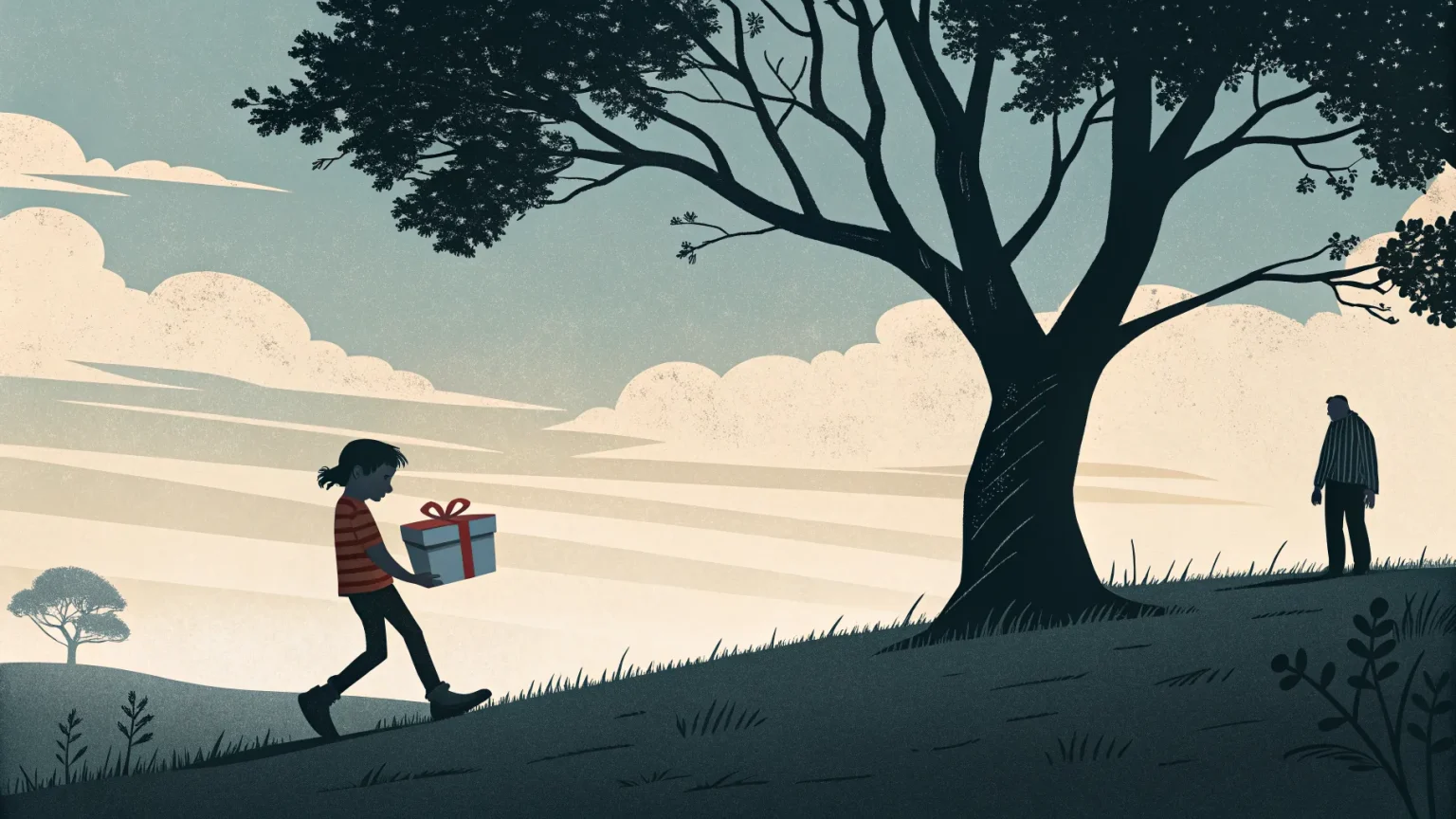
For years, I carried anger like armor. As a kid, I watched my dad forget my tenth birthday and then shrug it off by saying he didn’t believe in birthdays. That moment branded him in my mind as a liar, a cheater, a manipulator. Decades later, the man I thought I knew sent me a gift that changed how I look at success, love, and legacy.
My opinion is simple: attachment to things poisons our relationships and our joy. The freedom we seek doesn’t come from what we own. It comes from what we can let go.
The Jacket That Taught Me Wealth
At 30, I got a box from my dad. Inside was a jacket. It fit perfectly. I slipped it on through tears, grateful for a kind gesture that felt three decades overdue. Then I reached for the pockets—and found them all torn out. Every lining, every pocket, ripped clean.
“It’s not for wearing.”
He told me the jacket was meant to hang in my closet as a reminder of him. I snapped back. Why would I want that? I had spent years insisting I was nothing like him. He answered with a lesson I didn’t want to hear but needed to learn.
“That jacket’s to hang in the closet and remind you you’re just like me. I want you to learn the lesson I should have learned: I can’t take anything with me when I’m gone.”
Wealth without wisdom is a weight. The jacket wasn’t a peace offering. It was a mirror. It forced me to confront the truth: I had chased status and stuff with the same blind drive I judged in him.
What That Pain Revealed
As Chairman of the Napoleon Hill Institute and a former CEO in sports and entertainment, I’ve seen what money can do. I’ve seen it elevate lives. I’ve also seen it turn people into prisoners of their own image. The harsh reality is this: your net worth doesn’t fix a hole in your heart.
His approach was blunt. Some might call it cruel. I did for a long time. But the message hit me where no award or paycheck could. Stripped pockets said what lecture notes can’t: you leave the game with what you gave, not what you grabbed.
- Things don’t make us secure; habits do.
- Love lasts longer than recognition.
- Service scales; ego shrinks.
These aren’t slogans. They are survival tools. If you’re living for the next win, the next car, the next applause, you’re building a life that can vanish in a single phone call.
The Counterpunch—and Why It Misses
Some will say tough lessons like mine risk trauma more than growth. There’s truth there. Not every harsh act turns into wisdom. But avoiding hard truth has a cost, too. Pain with purpose can form character. The key is what we do next. Forgiveness isn’t approval. It’s a release valve that lets us move forward without dragging old weight.
My dad’s methods failed me early. His message saved me later. Both can be true. We can reject the behavior and still keep the wisdom.
How I Live the Jacket Today
I keep that jacket where I can see it. It reminds me to choose values over vanity and impact over optics. The math is simple and it works in any field, from sports to startups to families at the dinner table.
- Let go of one thing you don’t need—today.
- Make one call to repair a strained tie—today.
- Give one resource without expecting anything back—today.
Small steps break big patterns. You don’t need a grand plan to shift your life. You need honest action, repeated often.
The Stand I’m Taking
Success without surrender isn’t success—it’s fear in fancy clothes. My dad ripped the pockets out of a jacket. In doing so, he ripped the pockets out of my excuses. I stopped pretending more stuff would fill me up. I started choosing meaning over things, people over pride, and service over scorekeeping.
Hang your own jacket. Let it remind you that what matters most will never fit in a pocket. Call someone you should have called. Give something you once would have kept. Build a life that can’t be repossessed.
Frequently Asked Questions
Q: Why tell such a personal story about your father?
Because real change starts with honest inventory. This moment shaped how I see wealth, love, and legacy. Hiding it would hide the lesson.
Q: Are you saying money doesn’t matter?
Money matters. It provides options. I’m saying attachment to money—or anything—can cost peace, purpose, and relationships if it owns you.
Q: How do I apply this idea without a dramatic moment?
Create your own reminder. A note on the mirror, a weekly donation, a standing call with family. Simple, repeatable acts build new beliefs.
Q: What if a parent’s harsh lesson caused lasting hurt?
Acknowledge the harm and set boundaries. Then extract any useful truth. Healing doesn’t require denying pain; it asks you to stop living inside it.
Q: How can leaders use this approach at work?
Model non-attachment. Reward service, not just wins. Celebrate learning over ego. People follow leaders who give credit and take responsibility.


