

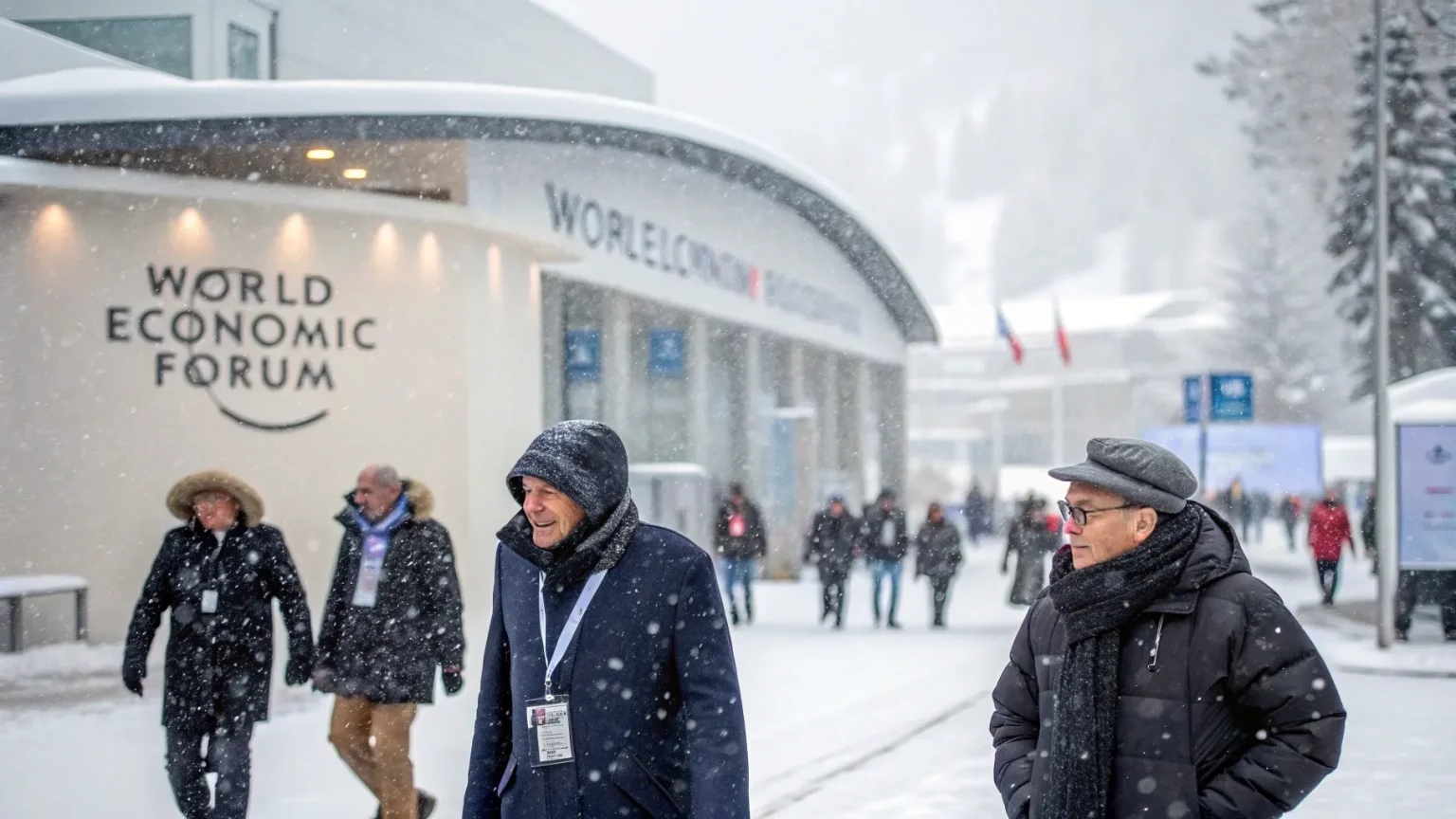
Warmer air and soft snow set a different tone in Davos this year, and it showed on the streets. Attendees at the World Economic Forum traded Arctic gear for lighter layers as the annual meeting unfolded in the Swiss Alps. The shift in attire reflected milder-than-usual conditions and raised fresh questions about climate, logistics, and image at one of the world’s most watched gatherings.
“Here’s how some of this year’s WEF attendees shielded themselves from the milder-than-usual elements.”
Delegates, policymakers, and executives often arrive ready for deep cold. This time, daytime temperatures hovered near freezing, softening sidewalks and easing the bite of the wind. The change did not halt business, but it shaped how the event looked and moved.
Weather Sets an Unusual Tone
Davos in January is normally crisp and bright, with hard-packed snow and sheets of ice. The softer weather shifted the daily rhythm. Footpaths became slushy. Snowbanks shrank. Security teams adjusted routes to keep foot traffic steady and delays low.
Locals said the week felt strange. Hotel staff reported fewer requests for heavy boots and thermal gear. Shuttle drivers noted easier starts but slower stops on wet roads. The town managed, but it was a different scene.
Practical Fashion on the Promenade
Wardrobe choices told the story. Many attendees picked sleek coats over down parkas. Shoes changed most. Chunky snow boots gave way to leather sneakers and lug-soled loafers that could handle slush.
- Trench coats and tailored wool overcoats
- Lighter parkas with water-resistant shells
- Rubberized footwear and all-weather sneakers
- Scarves, beanies, and lightweight gloves
Umbrellas dotted the promenade when flakes turned to drizzle. Tech staff carried microfiber cloths to dry badges and phones. The look was still formal, but more adaptable than in past winters.
Logistics and Safety Adjustments
Warmer weather meant different risks. Ice patches were fewer, yet slush made curbs slick. Crews spread gravel and cleared drains to prevent puddles near checkpoints. Venue teams moved some outdoor receptions under canopies to avoid wet flooring and cold breezes.
The transport network held up well. Buses ran on time, thanks to clear highways and milder nights. Security officials said visibility was better without heavy snow showers. That made screening lines faster and kept gatherings on schedule.
Climate Optics at a Global Stage
The lighter layers also carried symbolism. Climate change is a regular theme at this meeting. A warm week in the Alps sharpened that focus for many observers. The sight of snow melting during climate talks drew comments from delegates and media crews.
Scientists warn that European winters are trending warmer. They link that trend to rising greenhouse gases and shifting weather patterns. A single week does not prove a long-term path, but it fits with reports of less stable winter seasons.
Industry and Policy Takeaways
Energy and transport executives discussed how changing winters affect demand and safety. Warmer days can cut heating loads but increase freeze-thaw damage to roads and rails. Event planners weighed lessons for future conferences, from dress guides to drainage plans and flexible venues.
Insurers also watched closely. Milder winters can reduce certain claims, like burst pipes, yet increase slips and trips on wet surfaces. They advised organizers to plan for a wider set of conditions, not just deep cold.
Local Business Adjusts in Real Time
Shops in Davos reported fewer emergency sales of heavy gear. Instead, they sold waterproof shoes, compact umbrellas, and shell jackets. Cafés stayed busy as people took short breaks to warm up and dry out. Hot drinks did brisk trade, but outdoor seating saw more use than usual for January.
Hotels adjusted housekeeping to handle wet floors and damp coats. Some offered drying rooms usually reserved for ski equipment. These small changes kept guests comfortable without major cost.
What Comes Next
Organizers now face a planning question. Should winter events expect a wider weather range and outfit staff and venues accordingly? Many insiders say yes. That means more covered walkways, better drainage, and clearer guidance on footwear and layers.
For Davos, the week delivered its usual dealmaking and debate, with a different feel underfoot. The clothes told part of the story. So did the streets and schedules that bent to the weather.
The next meetings will test whether these adjustments stick. Attendees may arrive with lighter bags and more versatile gear. Planners may set up spaces that handle slush as well as snow. If this winter becomes a pattern, the WEF’s look—along with its agendas—could change with it.


