

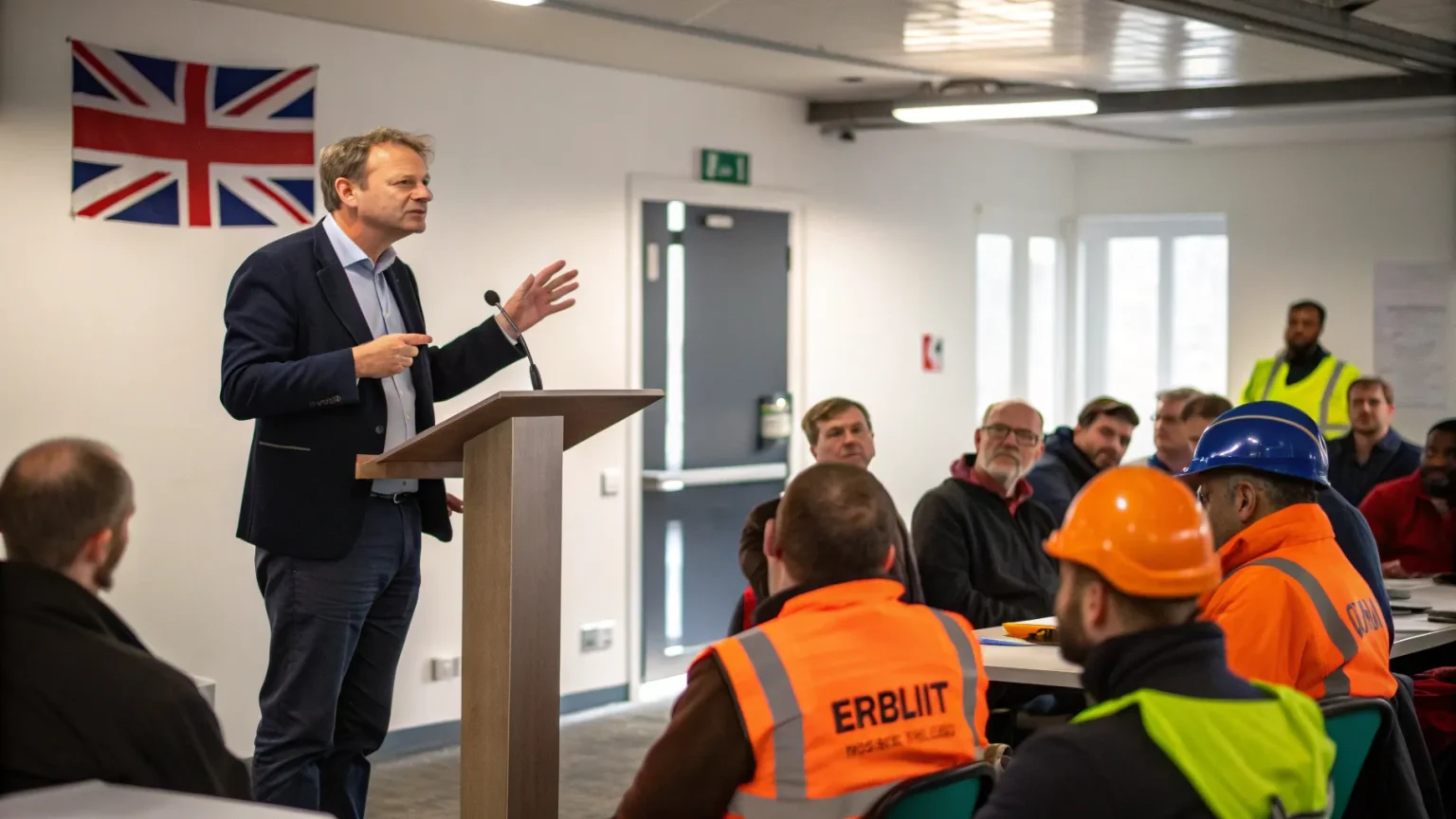
British trade union leader Paul Nowak has called for the “closest possible” economic relationship with the European Union, renewing debate over the United Kingdom’s post-Brexit trade approach. His comments spotlight concerns from workers and employers who say red tape and border costs are weighing on jobs, pay, and investment.
The appeal comes as businesses adapt to the Trade and Cooperation Agreement, which has governed UK‑EU commerce since 2021. It also arrives amid discussions on how to ease trade frictions without revisiting the 2016 referendum result.
Brexit’s Trade Adjustment, Four Years On
The UK left the EU single market and customs union at the end of 2020. Since then, companies have faced new customs checks, rules-of-origin requirements, and sector-specific hurdles. Services firms have also reported challenges with market access and recognition of professional qualifications.
Data underline the stakes. The EU remains Britain’s largest trading partner, accounting for about 42% of UK exports in recent years, according to the Office for National Statistics. While trade volumes recovered after the pandemic, many small and medium-sized firms report higher costs and longer delivery times.
Manufacturers point to supply chain pressures and compliance costs. Carmakers welcomed an EU decision to delay stricter electric vehicle rules of origin until 2027, but industry groups warn that long-term certainty is still needed for battery investment and jobs.
What “Closer” Could Mean
Nowak’s message echoes calls from unions and several business groups for practical steps that reduce paperwork and costs at the border. He said he wants the “closest possible” economic ties with the EU, a phrase that suggests deeper cooperation while stopping short of rejoining the single market or customs union.
- Targeted regulatory alignment in key sectors to simplify checks.
- Mutual recognition agreements to help services and professional workers.
- Improved mobility arrangements for short-term business travel.
- Sector deals on food, chemicals, and medical products to cut delays.
Unions argue that clearer rules and lower trade costs support wage growth and job security, especially in manufacturing hubs. They also seek strong worker protections in any future adjustments, including commitments on health and safety, working time, and fair pay.
Government and Business Views
Successive UK governments have pledged to make the most of regulatory freedom while seeking smoother trade. Ministers have ruled out rejoining EU institutions, but have signaled interest in technical fixes, such as trusted trader schemes, digitized border processes, and sector-based agreements.
Business groups, including the British Chambers of Commerce and Make UK, have urged more stability and clarity. They favor closer cooperation where it cuts costs without reopening core political arguments. Many firms want the UK and EU to expand mutual recognition for product testing and professional qualifications.
Worker advocates, led by Nowak, link trade friction to pressure on pay and overtime. They argue that predictable rules help firms commit to training and growth in UK plants and offices.
Voices From Labor
Paul Nowak said he wants the “closest possible” economic relationship with the EU.
For unions, that stance pairs open markets with strong labor standards. They view the non-regression clauses in the UK‑EU deal as a baseline, and push for cooperation on skills, safety, and fair competition, so that workers are not undercut.
What to Watch Next
Talks between the UK and the EU are likely to keep focusing on practical measures. Areas to monitor include veterinary arrangements to ease food checks, digital customs, and further sector pacts to reduce duplication. Services market access will remain a key test, given its share of UK GDP and exports.
Parliament and industry will also weigh the impact of any regulatory changes on consumer prices and regional jobs. Unions want guarantees that any deal supports pay and protections as well as trade volumes.
Nowak’s call adds momentum to a gradual, technical approach. The core debate is no longer whether to reverse Brexit, but how to make trade work better for workers and businesses.
The next phase will hinge on quiet diplomacy and detailed rulemaking. If both sides can trim costs while maintaining standards, the UK’s largest trade relationship could become smoother, with gains felt on factory floors and in service firms across the country.


