

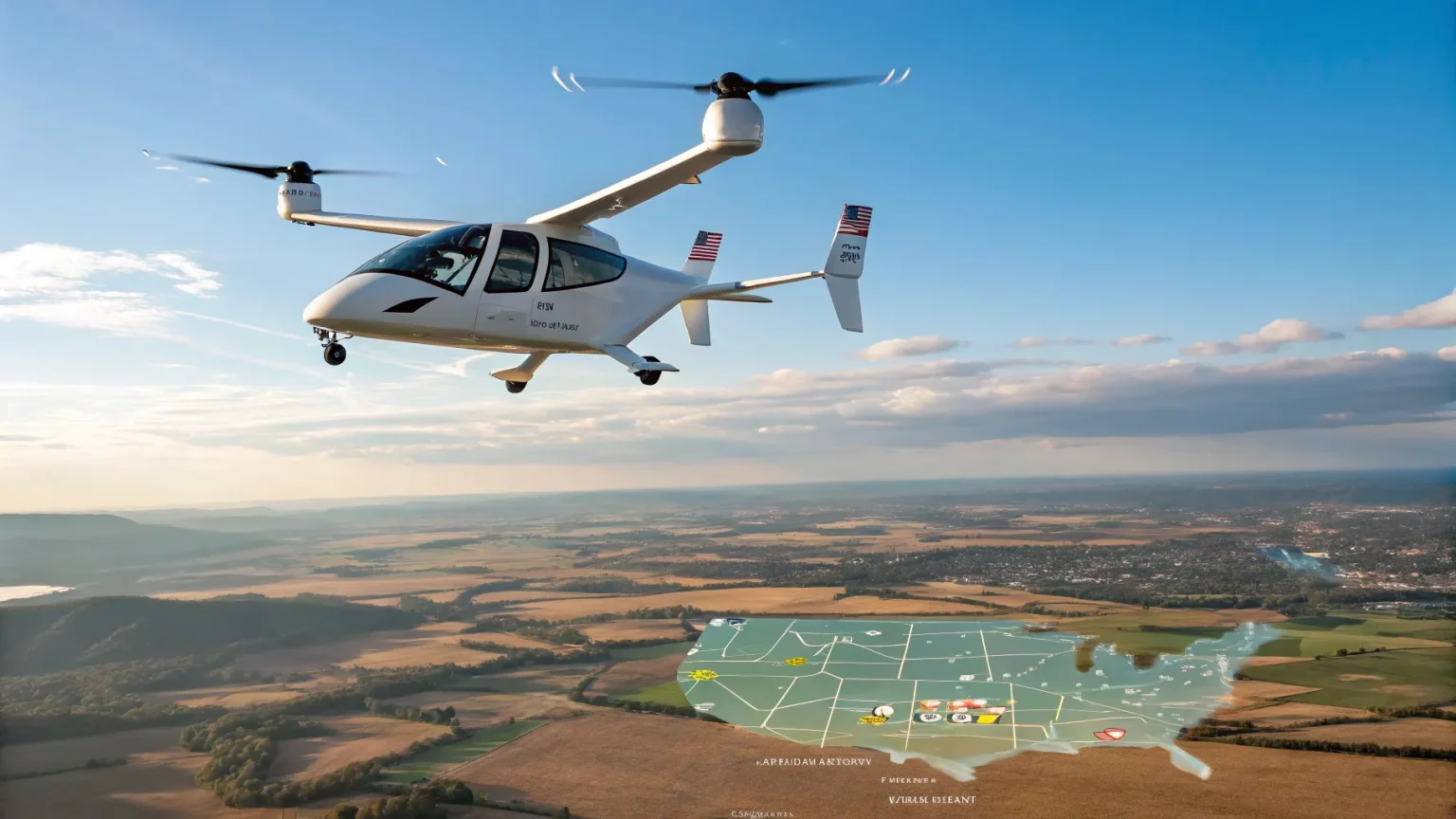
The Federal Aviation Administration plans to launch a summer pilot program for air taxis across 26 states, partnering with Joby Aviation, Archer Aviation, and BETA Technologies. The effort aims to test electric vertical takeoff and landing aircraft in real-world settings and prepare regulators, cities, and operators for safe commercial use.
The initiative will coordinate flight trials, ground operations, and airspace integration at multiple sites. It is designed to collect data on safety, training, infrastructure, and community impact. Agency officials and company teams expect initial demonstrations to inform certification and future service concepts in major metro areas and smaller markets.
Why It Matters Now
Electric air taxis have moved from concept to testing over the past five years. The FAA has outlined a staged path to bring early services online, with limited operations possible once aircraft achieve type certification and operators meet service standards. This summer’s trials mark a key phase: proving how these aircraft perform around airports, heliports, and new “vertiport” sites while sharing airspace with helicopters and small planes.
Several cities have announced interest in short-hop routes that could ease congestion on the ground. The pilot program will also examine noise, charging requirements, and emergency procedures. Results are expected to guide standards for pilots, dispatchers, and maintenance crews as the sector prepares for scaled operations later in the decade.
Who Is Involved And Where
The FAA named three manufacturers as core partners. Each brings different aircraft architectures and operational plans, giving regulators a broad test set:
- Joby Aviation: Focused on point-to-point passenger service using piloted eVTOL aircraft.
- Archer Aviation: Targeting urban and airport shuttle routes with piloted aircraft.
- BETA Technologies: Developing eVTOL and eCTOL aircraft, with cargo and passenger use cases.
The agency plans sites across 26 states, covering dense urban corridors, regional airports, and suburban locations. This spread allows testing in varied weather, terrain, and traffic conditions.
Safety, Certification, And Airspace Integration
Safety remains the central hurdle. The FAA’s trials will test procedures for takeoff and landing, separation from other aircraft, and contingency handling. Data from these flights can support pilot training standards and operational limits, such as wind thresholds and approach profiles.
Certification also advances in parallel. The manufacturers must show their aircraft meet airworthiness standards and that parts supply, maintenance, and training systems are ready. Operators will need approval to carry paying passengers and to run scheduled services. The summer program offers a structured way to align these tracks with real operations.
Infrastructure And Power Needs
Charging and ground support are critical for turn times and reliability. Sites will test fast-charging equipment, battery management, and coordination with local utilities. Airports and vertiports must also handle passenger screening, fire safety, and emergency response plans suited to high-voltage systems.
Local governments will evaluate land use, design standards, and community impact. Shorter routes reduce time in the air but may require more frequent charging. Findings will shape layouts and operational rhythms for early commercial routes.
Noise And Community Concerns
Noise remains a top issue for residents near flight paths. Companies say their aircraft are quieter than helicopters, with propellers tuned for lower acoustic impact. Testing will measure actual noise levels across approach and departure paths. Transparent data can help cities decide where to place vertiports and how to design corridors.
Public acceptance will depend on reliability, cost, and how well operations fit with neighborhood needs. Clear communication on flight schedules, complaint processes, and environmental reporting will be key for local support.
Market Outlook And Use Cases
Early routes are likely to focus on high-value corridors, such as airport transfers and city-to-suburb links. Cargo and medical logistics may scale first on certain aircraft types. Demand will hinge on price per seat, travel time savings, and schedule reliability.
Analysts expect a gradual ramp. Initial services may operate with limited hours and small fleets, expanding as charging networks grow and maintenance data support higher utilization. Lessons from the 26-state program should reduce uncertainty for insurers, investors, and city planners.
What To Watch Next
Key milestones include site selections, the first test flights under the program, and initial public demonstrations. Stakeholders will track how aircraft perform under crosswinds, rain, and heat, as well as actual turn times at chargers. Community feedback and measured noise profiles will influence future siting decisions.
The summer trials signal a shift from lab testing to practical operations. If the program shows safe, predictable performance, it could help unlock broader approvals and route launches over the next few years. If challenges arise on safety, noise, or grid capacity, the data will help refine standards and designs before full-scale rollout.
For now, the FAA, Joby, Archer, and BETA have set a testbed that can answer the biggest questions facing electric air travel. The results will shape how, where, and how quickly air taxis move from trial to service.


